Memories of Her Best Friend: The Jaguar
By James Perry
Sitting here listening to Bobby Helms singing “Special Angel” with the Anita Kerr Singers providing background vocals recorded at Bradley Studios in Nashville July 9, 1957. It hit #1 on the country charts and #7 on the Billboard Pop Charts. This beautiful song by Bobby Helms brings back in my memory my appointment with Dr. Edmunds on March 12, 2026. My son, Joel drove me to the appointment. On entering Dr. Edmund’s office, walking up to the reception cubicle I noticed a large poster behind the lady sitting there. She introduced herself as Edith and asked how she could help me. I stood there for at least one minute staring at the poster. It had a large picture of a large black jaguar on it. Edith had a faint smile watching me as I guessed this happened with most new patients on their first visit. After I gave Edith my name and appointment time I asked her about the jaguar. Edith told me her uncle had ran an animal rescue and rehab center in Largo, Florida. Edith helped her Uncle Vernon Yates when she was a young lady at the animal rescue and rehab center. While helping her uncle a mature black jaguar was rescued and placed there. Edith made a pet of the jaguar and was the only person who the jaguar would allow close, and would even lick Edith’s hands. Edith guessed the Jaquar was eight years old.
From what Edith has told me this black jaguar was selective as to who his friends were. This jaguar evidently had traits like domestic dogs and house cats. They almost always selected one person as their master and are loyal to that individual. This jaguar must have sensed an affinity with Edith.
Today jaguars in the USA inhabit parts of Arizona, New Mexico, and Western Texas. Most jaguars in America were brought and planted in these states during the late 1990’s. A group of animal rights people in Arizona with financing from a Georgia TV mogul transplanted jaguars in those three states. The local ranchers protested against re-establishing jaguars because of the danger to humans and also their livestock. Wild jaguar’s main food source is deer, wild hogs, and cayman, but will also poach a cow or calf occasionally. Until the early 1930’s jaguars were present from Maryland, south through Kentucky to the Gulf of Mexico, and west through Nevada. Jaguars were hunted to extermination because of fear by humans and the jaguar preying on domestic livestock.
Today in America jaguars inhabit the south-western border states from Texas to Arizona, then south through Mexico and most of Latin America and South America from the Andes Mountains through the Amazon Basin and south including the Pampas. With the declining forest and jungles, the jaguars were turning to preying on livestock, especially on cattle operations which has caused cattle operators to hunt and kill many jaguars. Today the cattle operators are beginning to replace trees and let jungle areas recover, which will increase jaguars’ natural food sources. This seems to be helping their predation problems and the jaguars are helping to keep in check the balance of nature in these reclaimed areas. The jaguar here in our south- west states are on average smaller than the South American jaguars. The south-western American jaguar males usually weigh up to 200 lbs. The female jaguar usually weighs up to 140 lbs. South American jaguar males can weigh up to 300 lbs., with the females weighing up to 240 lbs. These weight differences are caused by more available food sources and more moderate climates.
Vernon Yates ran a very clean, well maintained Wildlife Rescue and Rehab Preserve. He also had cooling off stations for the animals as summers in south Florida were hot and humid. Vernon bought meat for the animals from local grocers and Public donated products for their feeding, also. The Wildlife Rescue and Rehab Preserve was funded by donations. The animals there had the first priority over everything. Vernon Yates had no animals to escape over all the years that he ran the Wildlife Rescue and Rehab Preserve. If my info is correct Vernon ran this facility from 1980 until shortly before his death in 2025. Before his death Vernon placed the animals with other animal rescue operators.
Edith Stewart who was Vernon Yates niece was born in Augusta, Georgia on July 4, 1974. Her family moved to Lymon, South Carolina where Edith attended school 1-9. Then after attaining her bachelor’s degree in health care management, she moved to St. Petersburg, Florida in 1996. At the age of twenty-one Edith started helping her uncle, Vernon Yates, at the Wildlife Rescue and Rehab Preserve in Largo, Florida. Edith said that Vernon had a section for reptiles in his Wildlife Rescue and Rehab Preserve which no one was allowed to visit as there was some of the world’s most deadly snakes kept until they were placed elsewhere. Vernon also had other big cats, otters, and bears for rehab. Vernon’s care for these animals made their lives better and gave both Vernon and Edith a feeling of accomplishment that most people never get. Included with this article are pictures of the black jaguar and Edith holding and being held by bears that were guest of Vernon’s facility.
Some songs to enjoy on YouTube:
1. It’s Too Soon to Know by The Orioles
2. Baby We’re Really in Love by Hank Williams
3. Green Eyes by Bob Eberly and Helen O’Connell
4. Can Anyone Explain No, No, No by The Ames Brothers
See You Next Month
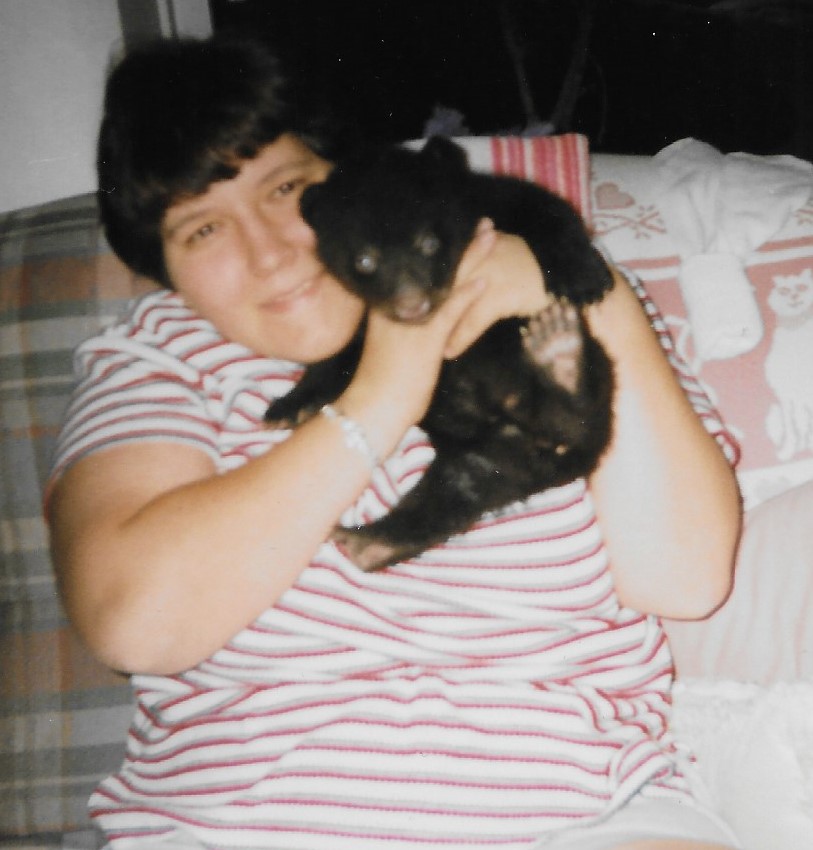
Edith with Bear Cub
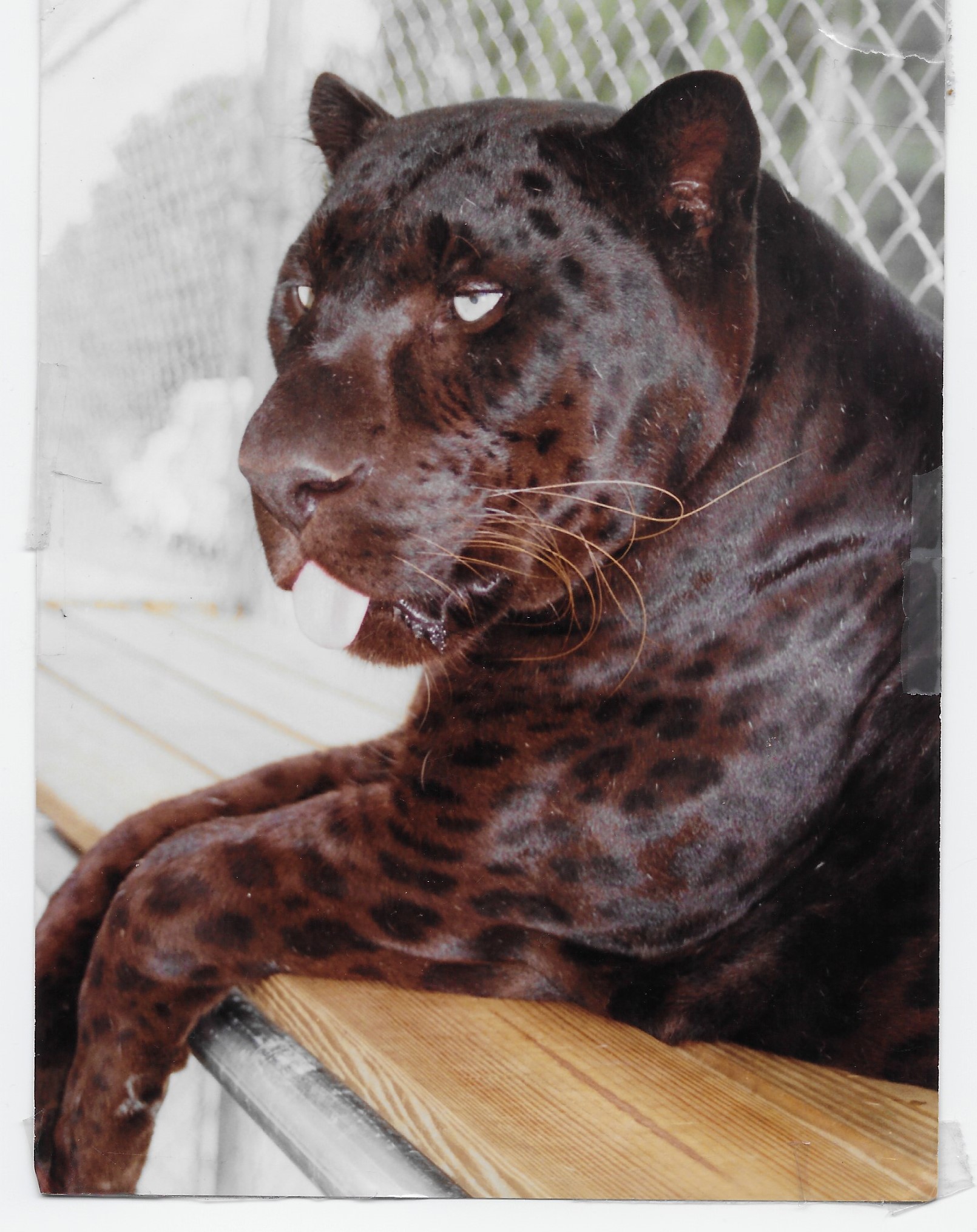
Jaguar
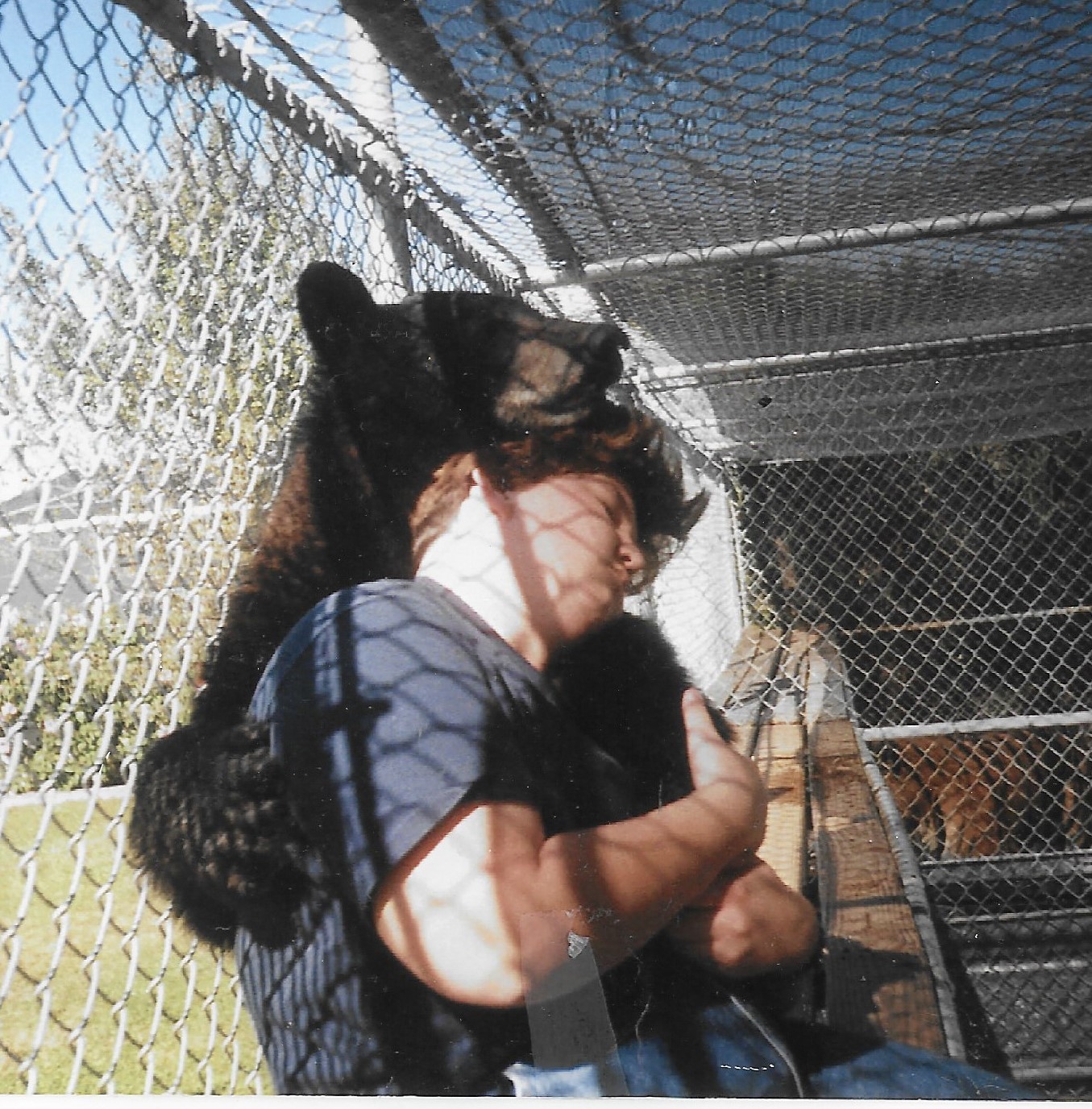
Bear Holding Edith
- Log in to post comments