Japan’s Economic Attempts at Economic Recovery
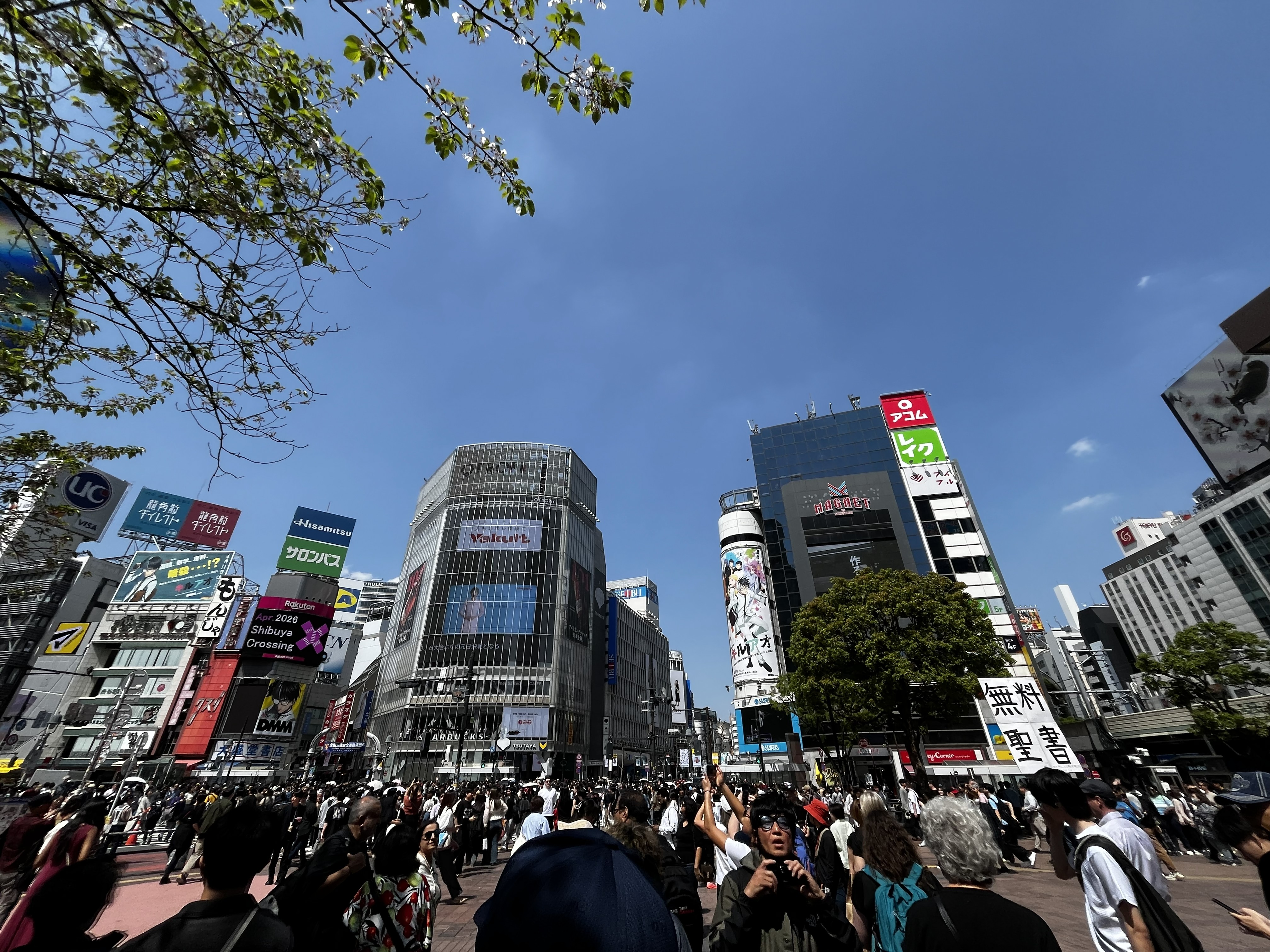
Shibuya Crossing, Japan -photo by Archie Wilson III
In last month’s article, I promised to explain the actions that Japan took in an attempt to recover from the economic crisis of the Lost Decades. Japan tried several different economic policies in an attempt to recover the economy. The truth is, though, Japan’s economy has not really fully recovered to its heights of the 1980s, and economists have tried to explain several reasons for this. I will first give a very brief overview of the economic policies that took place in the 1990s, 2000s, and 2010s.
In the 1990s, Japan tried to stimulate the economy with government spending, but one of the problems they faced was that banks in Japan were still carrying bad debt. In the late 1990s, the Bank of Japan (BOJ) introduced zero-percent interest rates to encourage new loans, investments, and refinancing of bad loans. However, deflation increased, while consumer spending slowed down (Congressional Research Service 2001).
In the 2000s, under Prime Minister Junichiro Koizumi, Japan focused on reforming the banks within Japan and government deregulation, with deflation still being a problem. The banks carrying bad loans were forced to get rid of them, and companies that received these loans were forced to restructure (International Monetary Fund 2008). The restructuring of the banking system was good for Japan, but the 2008 global financial crisis sent Japan back into a recession, causing further problems.
In 2012, Shinzo Abe became the prime minister of Japan, and he introduced his economic policy termed Abenomics, which had three main goals of “fiscal expansion, monetary easing, and structural reform.” Similar to attempts in the 1990s, Abenomics sought to stimulate the economy with government spending, but the difference was that in the 1990s the focus was more on fixing the banking crisis and in the 2010s it was more about overcoming economic stagnation. Abenomics used what is known as Quantitative Easing, which allowed central banks to print money to buy assets, aiming to create inflation and encourage spending. Some of the structural reforms introduced in Abenomics included agriculture, deregulation, and increasing the number of women in the workforce (Council on Foreign Relations 2018; Investopedia 2026).
In the present day, it does not seem like Japan’s economy will recover to levels seen in the 1980s. In the last article, I claimed that Japan was close, but after further research I’ve concluded that this was wrong. Yes, Japan’s stock index, the Nikkei 225, is close to levels seen in the 1980s, but the global stock market in general is up and, honestly, heavily inflated. Japan has many factors that prevent it from rising to the levels it once had in the 1980s. Two of these factors are that Japan has an aging population, which means that it does not have enough young people to replace its older population, and this will lead to less economic production in the future. Japan also has more competition than it did in the 1980s. Other countries in the East Asian region, like China, Taiwan, and South Korea, among others, produce goods similar to what Japan had dominance over prior to the Lost Decades, like electronics and automobiles.
Japan’s declining population is not unique to Japan; many developed countries also face this problem, but Japan is just at the forefront. Furthermore, Japan is not an easy country to immigrate to, which means that immigration is likely not a fix to this problem. One could say the Japanese should have more kids to fix this problem, but people in developed countries like Japan have lower birth rates, and this is a problem that can be seen in almost every developed country.
I’m not writing that Japan’s economy will absolutely never recover to what it was prior to the Lost Decades; the future is unknown, but I’m asserting that it would be difficult even with good economic policies. I see a more realistic future in which the Japanese economy downsizes, but through good economic policy it finds a way to still prosper. That being said, the world we live in today has a global economy, and a smaller Japanese economy will inevitably have an effect on the other economies. As previously mentioned, developed countries are facing similar economic problems that Japan has, albeit with their own differences based on demographics, politics, and culture.
In conclusion, Japan’s economy has yet to recover to the levels it once saw in the 1980s. Several economic policies have sought to rejuvenate the economy to what it once was, but none have yet to fully succeed. Japan faces other problems such as an aging population and stronger competition in East Asia. Japan’s attempts at an economic recovery is a much more complicated issue than what could be covered in this article, but it is my hope that you, the reader, have learned something from this article.
Sources
Congressional Research Service. 2001. Japan’s “Economic Miracle”: What Happened? RL30176. Washington, DC: Library of Congress, October 1, 2001. CRS Report
Council on Foreign Relations. 2018. “Abenomics and the Japanese Economy.” March 23, 2018. CFR source
International Monetary Fund. 2008. Japan: Selected Issues. Washington, DC: International Monetary Fund. IMF source
Investopedia. 2026. “Abenomics Explained: Shinzo Abe’s Three Arrows and Economic Impact.” Investopedia. Investopedia source

- Log in to post comments