Winter Green
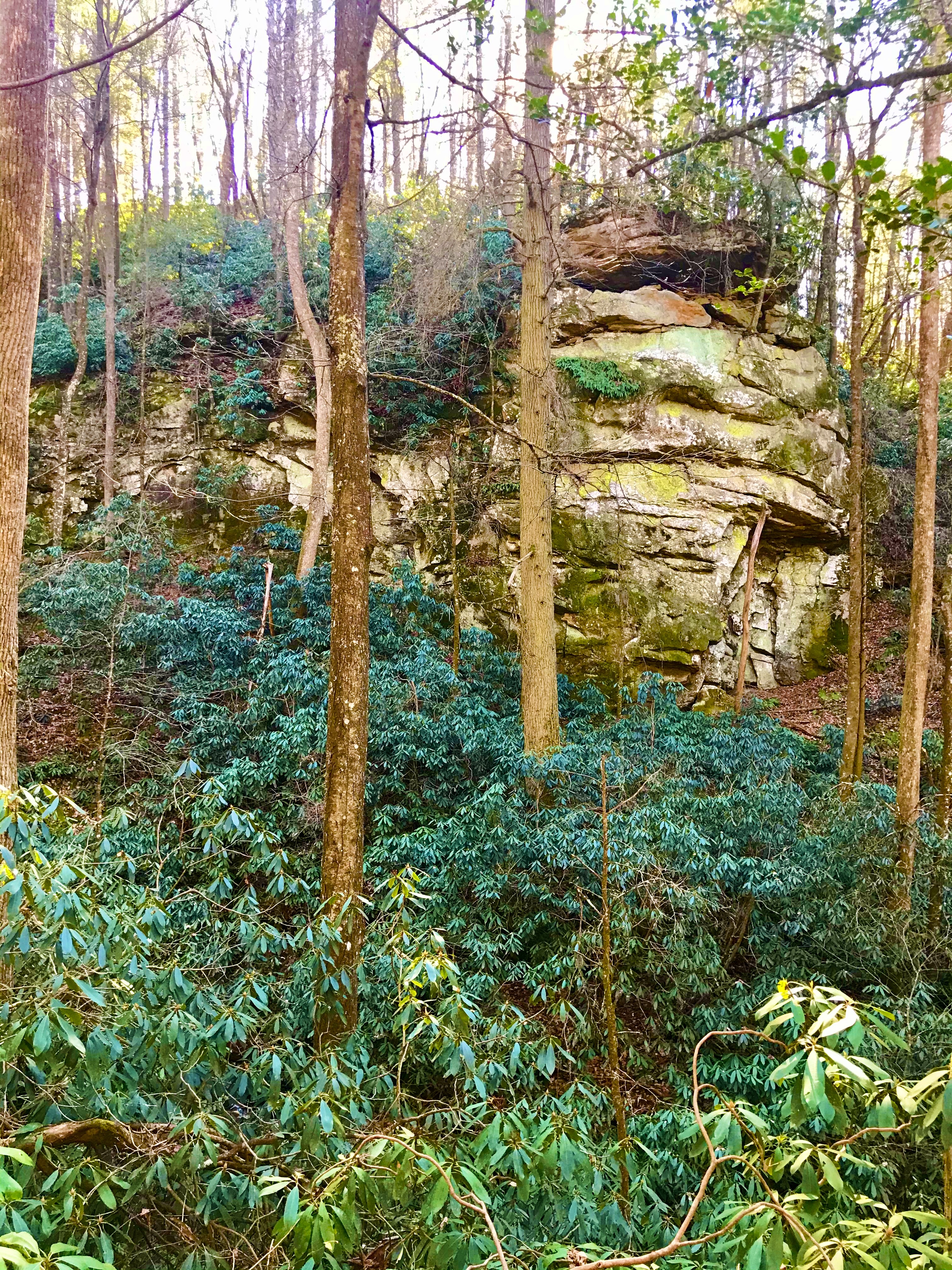
Evergreen native shrubs such as these rhododendrons add a nice touch of green to a winter forest landscape.
By Steve Roark
Volunteer Cumberland Gap National Historical Park
With the leaves off the hardwood trees, plants that remain green are more prominent and a handsome contrast to the “dead of winter”. Two that you are likely to see in the mountains on hikes are rhododendron and mountain laurel, which look similar and are often confused.
Rhododendron (Rhododendron maximum) is the large green shrub seen along cool mountain streams and moist slopes. It grows 6 to 12 feet tall and can form large impenetrable thickets difficult to walk through, so much so that early settlers called them “rhododendron hells”. The leaves are paddle shaped, thick and leathery, and around 6-7 inches long. During cold weather they tend to curl in direct relation to temperature, so the colder the weather the tighter the curl. During mid-summer there are showy clusters of large white flowers with 5 petals. One exception species we have in higher elevations is catawba rhododendron, which has purple flowers and is the ancestor of all the purple rhododendrons used for landscaping.
Mountain laurel (Kalmia latifolia) is also a shrub that averages only around 3-6 feet in height. It tends to grow in dryer areas than rhododendron, such as rocky sites and south facing upper slopes. Its leaves are also dark green and leathery but are only 3-4 inches in length and not as elongated as rhododendron. The flowers bloom earlier, usually May to early June, and appear as clusters of cup-shaped white to pinkish flowers. Early settlers called it “ivy bush”.
Both species are considered poisonous to livestock and are only eaten sparingly by deer and grouse. Sheep are most likely to eat the plants, but only when better food choices are unavailable. Honey from the blooms can be poisonous, but it is very rare that bees collect enough toxin in the nectar to cause a problem.
The wood of both species is very dense and heavy and has been used in the past for carving pipes and spoons. Another name for mountain laurel has been called “spoonwood”. The most popular use for both evergreens is for landscape planting, and many varieties have been bred for attractive flowers and foliage. Both rhododendron and laurel prefer slightly acidic soil.
Protection of woodlands from wildfire over the past 70 years has allowed both shrubs to increase their presence and are beginning to interfere with the regeneration of timber and wildlife tree species. It could be that in the future some prescribed burning may be needed to keep these hardy shrubs from taking over large woodland areas.

- Log in to post comments