Trees for Shade
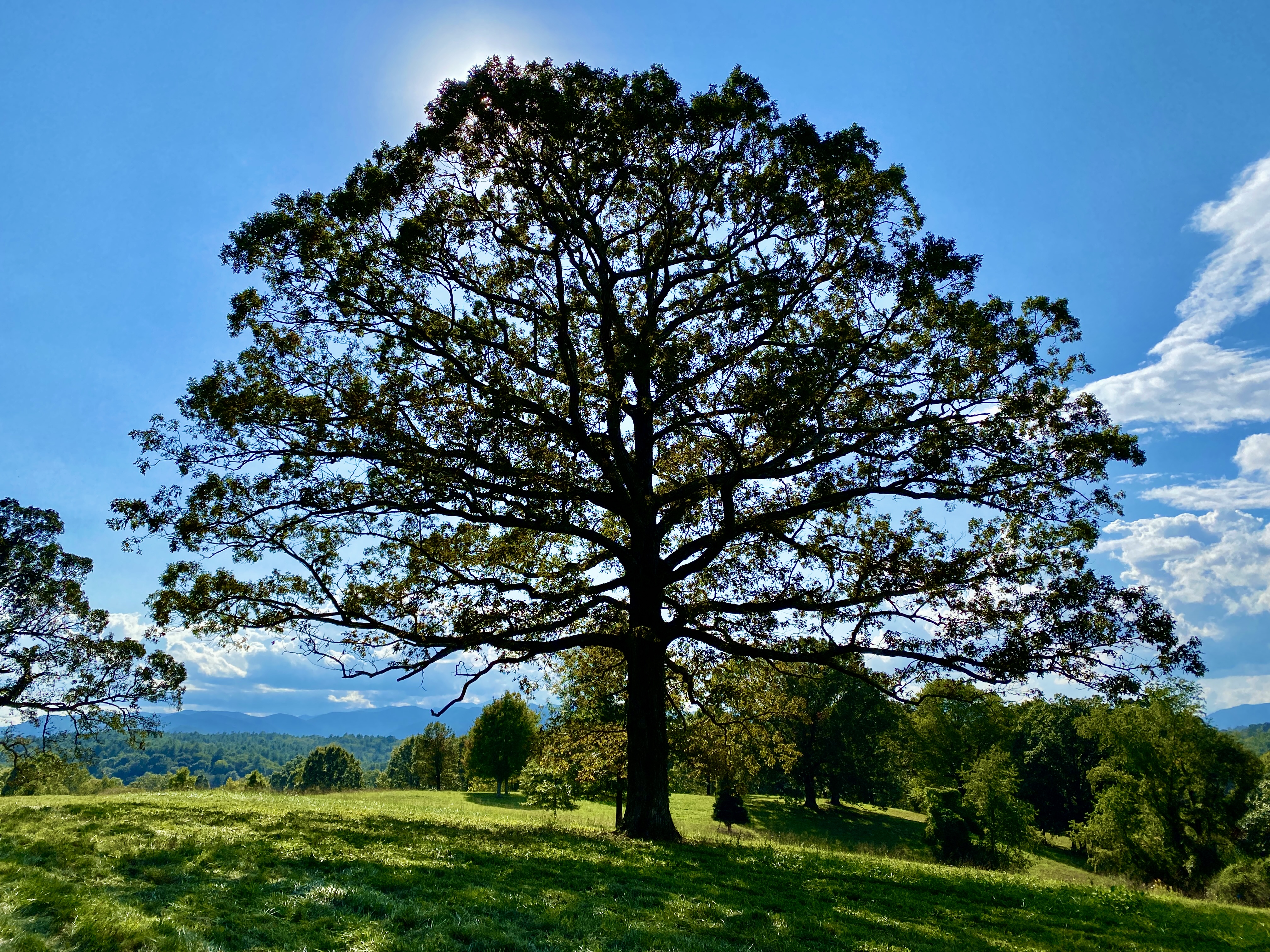
Trees especially with wide canopies provide a place to escape the hot sun plus can save on energy costs
By Steve Roark
Volunteer, Cumberland Gap National Historical Park
With summer upon us we will instinctively seek shade to get out of the hot sun, which can be readily provided by trees. No one will argue that trees add value to a home, but a well-placed shade tree can save on energy costs as well.
Shade from trees provides an inexpensive way to keep your yard and home cooler and more comfortable. On a scorching summer day when the air temperature out in the sun is 100 degrees, the surface temperature of a black asphalt roof is over 140, and an asphalt driveway over 120 degrees. Shade provided by trees can reduce these extreme temperatures, resulting in a more comfortable yard for outdoor activities and a house that is easier to cool. A 10% savings in cooling costs would help the family budget, but savings as high as 50% have been documented.
When planning a landscape for shade production, prioritize areas that get the highest heat gain. Here are some tips:
• For your home, trees on the east and west sides will provide the best protection from direct solar gain. A tree planted 10 feet from a wall will provide twice as much surface shading as one 20 feet away.
• 3/4 of total solar heat gain in a building comes through windows: tree shade would help
• Provide shade for areas that hold a lot of heat, such as driveways and parking areas.
• High summer use areas such as patios and porches benefit highly from shading.
• Shading an air conditioning unit can increase its efficiency by 10%.
Tree species with broad, dense crowns when mature offer the best shading potential. Trees planted close to your home should have strong wood. As a rule, fast growing trees have weaker wood.
The following is a comparison of the relative shade value of several popular trees. The highest shade value species include Maples, Hackberry, Beech, Green Ash, Walnut, Yellow Poplar, and Sycamore. Medium shade species are Sweetgum, Oaks, Kentucky Coffeetree, Cottonwood, and Elms. Those lowest in shade value include hickories, catalpa, ginkgo, locust, Goldenrain tree, Pears, and Hawthorns.
There is lots of stuff on the internet on selecting and locating trees for shade, so check them out for more detailed information.

- Log in to post comments