Skunks
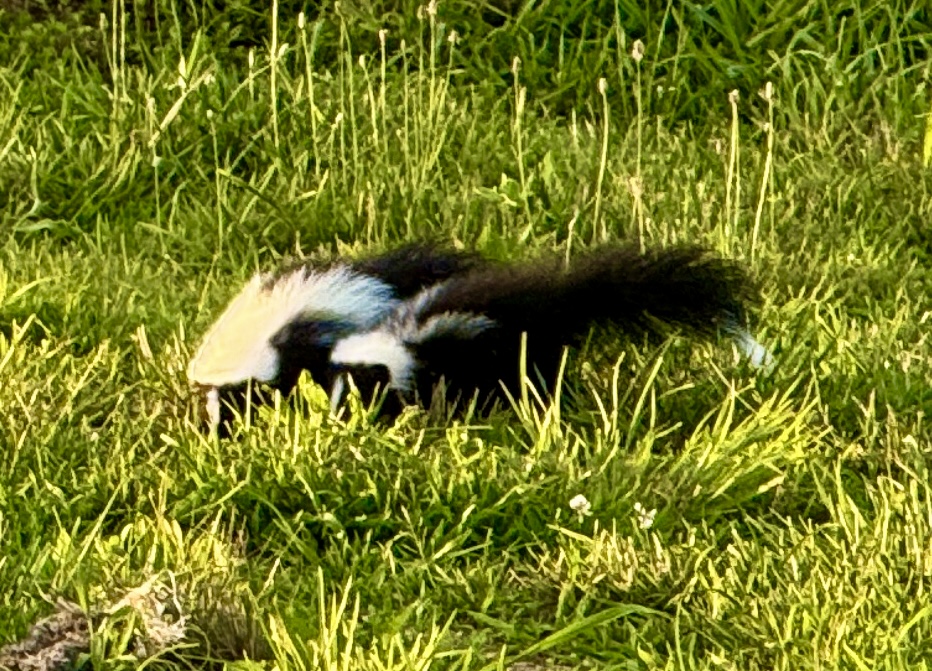
These two skunks casually walked through the yard unconcerned about my dog because they know they have a highly effective odorous weapon.
By Steve Roark
Tennessee Division of Forestry
Skunks need no introduction, with their black and white markings and universally known odor. The most common species in our area is the Striped Skunk (Mephitis mephitis), also known locally as a "polecat". This is another example of old English making it over the ocean and then preserved in mountain speech. Polecat was the name of a similar skunk species in the old country, which was particularly bad for raiding hen houses on farms. Poule is an old French word for "fowl”. The other alternative is that the first element is from the Old French pulent, which means "stinking."
Skunks are nocturnal animals, roaming about a mile or two each night searching for food. They are opportunistic eaters and will consume whatever is in season and handy. Studies show their diet consists of 41% insects, especially grasshoppers, dug up grubs, caterpillars of all kinds, and hornet and yellow jacket larvae; 22% is fruits and berries, especially in the fall; 14% is mammals, chiefly mice; 13% is grains, 6% is carrion, 2% is birds and eggs. In winter, skunks often seek shelter in a hole and sleep a lot. They do not actually hibernate, but sleep allows them to reduce energy use and make it through long winters.
The mating season for skunks is February and March, which seems to cause an uptick in skunks being hit by cars, I assume from males on the move for receptive females. Mating results in litters of 5 to 7 young (called kits) born sometime in May or June. The newborns are blind, almost hairless, and toothless. In about 6 weeks the kits are weaned and following their mother on hunting trips. They will become independent by fall and will disperse to make lives of their own. The average life span is 2 to 4 years.
Though skunks are beneficial consumers of insect and rodent pests, they are not admired by humans. They walk around quite fearlessly, knowing they have a weapon feared by all. The spray is a yellow, oily sulfur-alcohol musk compound, squirted from 2 oval scent glands located on either side of the anus. When about to spray, the skunk bends its body in a U shape with both head and butt facing the opponent. Powerful muscles discharge the musk in a fine mist or stream that can reach 15 feet. Spraying is usually a last resort, for the skunk and will try running away first. Then it may stamp its feet, shuffle backward, and may growl and hiss. But if these don't work the heavy artillery comes out.
Skunk roadkill is unpleasant, but the worst is when your dog takes a direct hit. I had a most unpleasant experience of having to clean up 2 dogs one bitter cold January. It wiped out our stock of tomato juice, which works pretty well in removing skunk odor.
A chemist came up with another scent removing formula that works really well. Mix together one quart of 3% hydrogen peroxide, a quarter cup of baking soda, and a teaspoon of liquid soap. Bathe your pet with this solution and rinse it off with water. Use up all the solution and don't try to store it, especially in a closed container. It could build up enough pressure to explode the container.

- Log in to post comments