The Late Great America - Part Four
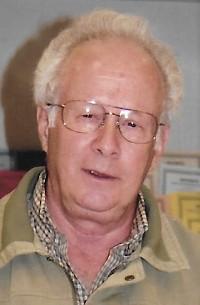
By James Perry
NASCAR: Slowly dying and I’m asking why.
A few years ago, an advisor to NASCAR asked me why it was losing so many fans both at races and on TV-covered races. This advisor owned four radio stations with two of his AM stations broadcasting the races and one FM radio station covering the Knoxville market.
I told him the number one problem of NASCAR’s dropping attendance was brand loyalty. He looked at me as if he didn’t understand my answer. I asked him how many brand cars now race on the NASCAR circuit. He stood there dumbfounded so I answered my own question. I said to him there are three: Chevy, Ford and Toyota.
There’s no longer Plymouth, Mercury, Pontiac, Dodge, Oldsmobile, nor does Buick enter their Chinese built cars anymore. All of these car brands, except for Buick and Dodge, are no longer produced and Chrysler Corporation, who built Plymouth and Dodge, are foreign owned. All of these car brands were very popular, won races and had brand loyalty among NASCAR enthusiasts, especially during NASCAR’s heyday of the 1960s through the 1980s. During this time actual production cars competed in NASCAR races. The brand had to sell a minimum of 5,000 cars per year to compete. Today’s three brands, Chevy, Ford, and Toyota, competing in NASCAR do not resemble a production car. The second reason for NASCAR’s atrophy is that all of the great drivers have either retired or died. They were mostly from the rural south and behaved decently.
My third reason was the “Intimidator,” by the name of Dale Earnhart, and his antics toward other drivers during NASCAR races. During his reign as NASCAR’s King until his death during a race, I saw a new attitude among drivers called road rage. This started as number three got more popular and increased more and more on our highways. Earnhart’s antics during NASCAR races turned off a lot of fans, especially families attending races or watching TV coverage.
OMC and Kiekhaefer dropped the ball on jet ski. During 1965 an American Clayton Jacobson II developed the first jet ski prototype. By 1970 he had developed twelve different prototypes. During this time, he approached OMC, who made Johnson and Evinrude outboard motors and offered them the jet ski under a royalty program. They laughed at his prototype and turned him down. He then offered the jet ski to Kiekhaefer Corporation and received the same results as OMC. They laughed at him. He then went to Japan and made the offer to Kawasaki who signed the contract quickly and the first Kawasaki jet ski hit the market in 1973. In 1986 Clayton Jacobson II entered a contract with Yamaha of Japan to develop their personal watercraft division.
By the way, OMC filed for bankruptcy in December of 2000. Maybe if top management had signed with Jacobson and developed a line of personal watercraft, OMC might still be in business today. This all goes back to decisions made by top management at OMC. Maybe there were too many old, rich, fat country club members in charge of OMC during the 1960s and 1970s.
Today there are four major (three Japanese, one Canadian) companies producing personal watercraft, selling well worldwide, but not one produced by an American company. Today there’s only one outboard brand, Mercury, built by an American company: Kiekhaefer. The other outboard brands are Honda, Suzuki, Yamaha and Nissan. All Japanese companies. Once upon a time OMC- and Kiekhaefer-produced outboard motors sold worldwide. They both refused the offer by Jacobson to produce his jet ski. The Japanese accepted his offer and now produce these personal watercraft for the worldwide market. Now OMC is gone and Kiekhaefer produces one brand of outboard motors, mostly for the American market.
American-made personal airplanes
The death of Piper, Cessna, Beechcraft and Mooney airplanes is approaching. Certain serial numbers of these aircraft brands are on a list to be grounded. This will cause a lethal blow to American general aviation. I will cover this in a later article.
American Business Institution―gone
Sears Roebuck, Montgomery Wards, K Mart, and Western Auto. It’s hard to believe that a company like Sears Roebuck could evaporate like early morning fog. A company so relied upon for well over a century. It’s hard to accept that a top retail company with departments like retail clothing, footwear, Kenmore Appliances, TVs and radios, Craftsman hand tools, lawn mowers, Allstate tires and batteries, J.C. Higgens bicycles, Puch motorcycles, Elgin outboard motors and boats, J.C. Higgins long guns, fishing tackle and complete engine rebuild kits for Ford, Chevy and Volkswagens. Sears had its own credit department and its own credit cards, auto service centers and Allstate Insurance. It’s hard to have believed that an American company so diversified within itself could disappear.
Montgomery Ward
Montgomery Ward was another institution that lasted for over a century, from 1872 until its closure in 2001. The main problem with Ward was that it was taken over by so many new owners from private investors to MOBIL in 1976. MOBIL’s ownership and lack of experience in managing a large chain operation led to the Ward stores closing after being taken over by G.E. Capital. In 1999 the company closed all 250 retail stores and laid off 37,000 employees in December 2000. The main claim to fame at Ward was a coloring book character created in 1939 by Robert L. May, an employee of Montgomery Ward. The character’s name was Rudolph the Red-Nosed Reindeer. Gene Autry recorded a song written about Rudolph in 1949. It was released for the Christmas season and eventually sold over 12.5 million copies. Cover versions by other artists sold over 150 million copies. No information is available on how many millions of copies of the Rudolph coloring books were sold.
K Mart: Too Many Chiefs, Not Enough Indians
K Mart evolved from the S.S. Kresge Company founded in 1899. Kresge started as a five and dime store and in 1944 had 2,486 stores globally. The first K Mart opened in 1962, which was six months before the first Walmart was opened. K Mart became known as the “Blue Light Special” store. K Mart, over the years in business, had a multitude of CEOs and board members, changed business philosophy regularly, changed logos and signage along with actual store coloring which confused the buying public. There seemed to be no continuity or direction at K Mart. One chairman, who later became CEO, Charles Conway, was loaned $5,000,000 by K Mart. At this time January 2002 K Mart filed for Chapter 11 bankruptcy. K Mart emerged from bankruptcy in 2003 and on November 17, 2004 the company announced its plan to purchase Sears for $11 billion. This union of two failing companies was a road to disaster. Joining Sears, K Mart died a young productive life.
Next month’s article we will delve into more remaining American corporations and businesses that were bled to death by domestic and foreign interest.
Here are some songs you may enjoy on YouTube
1. Heart and Soul by Bea Wain
2. Dreamin’ by Johnny Burnette
3. Two Voices, Two Shadows, Two Faces by Ned MiIler
See you next month.
- Log in to post comments