The Interestingly Titled Joe-Pye Weed
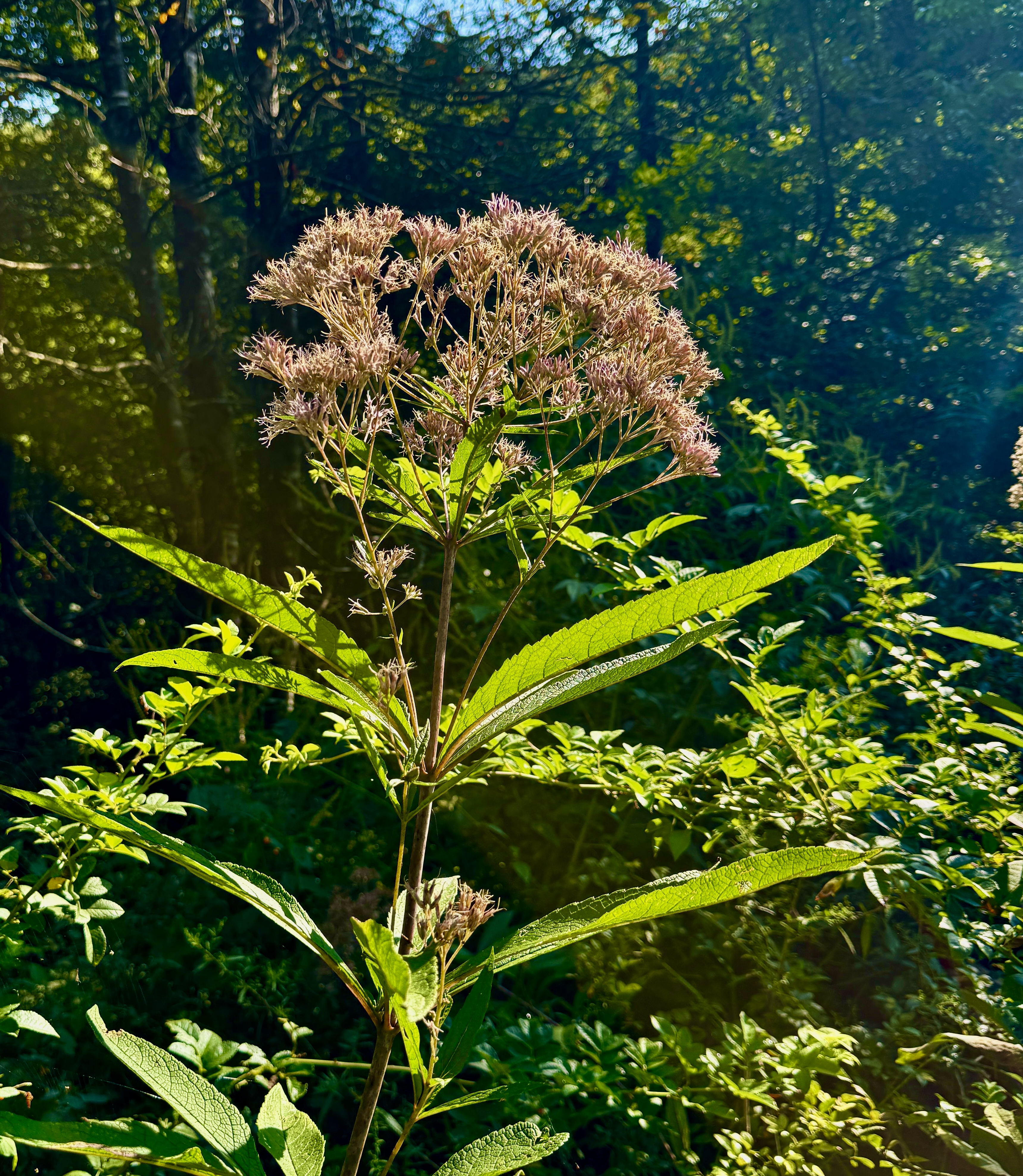
Joe Pye Weed is not only beautiful, it has a number of reported medicinal values, plus has a cool name.
By: Steve Roark
Volunteer Cumberland Gap National Historical Park
During August and September, it is easy to spot Joe-Pye Weed along roadsides and woodland edges. I wondered about its name, so I did my usual research thing and discovered the following.
The Joe-Pye Weed common one around here is Eupatorium fistulosum. It has another nice name as well, Queen of the Meadow. It is a tall, slim plant 5-10 feet in height, with whorls of dark green, spear shaped leaves along the stem. What will catch your eye is the dome-shaped cluster of dull pink flowers that bloom from August into October. It is common in our area and easy to spot even from a moving car.
The plant was named after one Joseph Shauquethqueat, an 18th- and early 19th-century Mohican sachem (chief) who lived in the Northeast. His name was shortened to Joe Pye by colonists, something commonly done to simplify signing documents. He strongly protested being moved off his native land along with his people around 1785 but did so in such an eloquent and honorable manner that he gained much respect. So, when colonists wanted to name a plant that was helpful with sicknesses such as a fever, it was named in Joe’s honor.
Besides being used to treat a fever, it was also used to treat kidney stones, resulting in other names like Gravel Root and Kidney Root. It has a long listing of medicinal uses, including treating bed wetting, dropsy (fluid retention), gout, rheumatism, impotence, asthma, and chronic cough.
Though considered a weed, the English have been using Joe-Pye as a cottage garden flower for decades. It is a handsome plant requiring little care. Because of its tall slim structure, it is often used as a background border behind shorter plants. It is an important plant for pollinator species, especially bees and butterflies. It is a host plant for 15 species of butterfly, who lay eggs on the plant so that the hatching caterpillar larvae can feed on the leaves.

- Log in to post comments