The Importance of Bumblebees
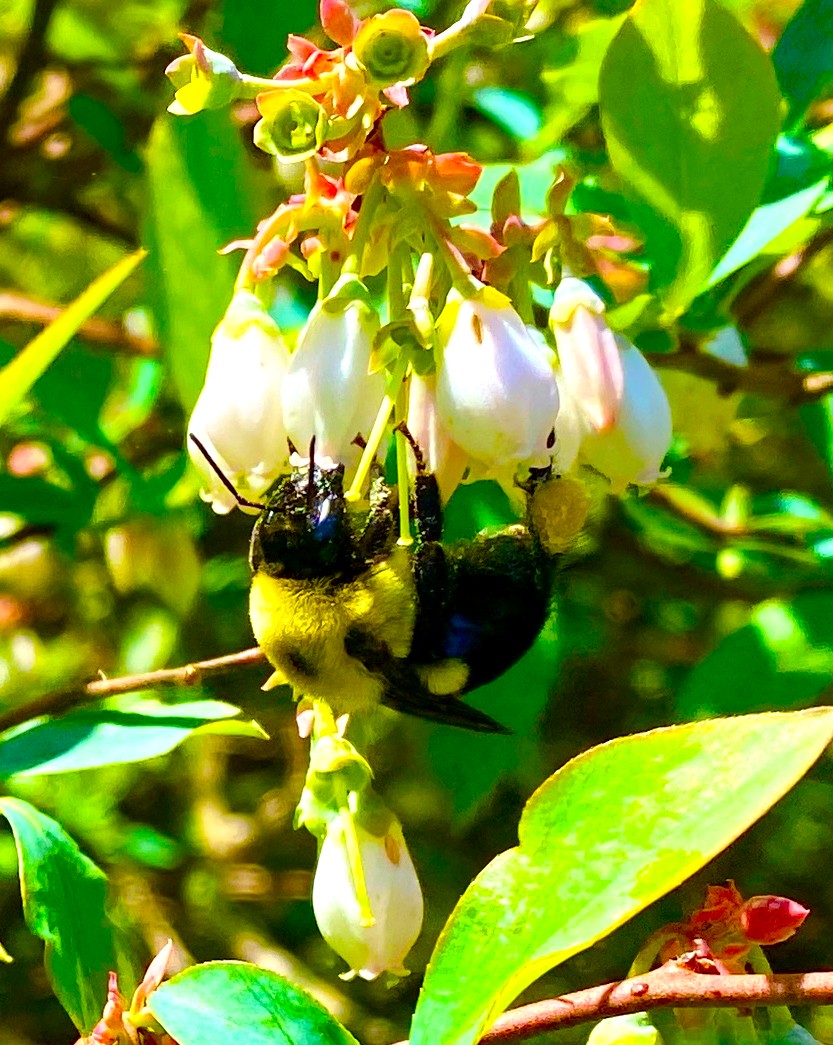
Bumblebees are designed to work in cool weather and able to pollinate many early blooming wildflowers.
After a long bleak winter, it is wonderful to see wildflowers in the spring, foretelling of warmer weather and the return of color to the forest. The earliest wildflowers bloom, such as Hepatica, Trout-lily, Bloodroot, Spring-beauty, Toothwort, Mayapple, and Trillium, are called "ephemerals", meaning "lives for a day". They all bloom for a very short period when it's still cool weather. And because they are strictly insect pollinated this could be a problem, since insect activity is minimal in the early spring. Enter our hero: the Bumblebee.
The Bumblebee is a critical pollinator of many early blooming flowers because it can tolerant cold weather. It can begin foraging early on cold mornings and keep at it well into the evening cool down. Flying Bumblebees generate body heat that is protected by dense fuzzy hairs that insulate them. In summer Bumblebees are more active early and late in the day, but tend to be inactive during the hot midday.
Some flowers are totally dependent on Bumblebees for pollination because their nectar is stored so deeply inside the flower that only Bumblebees, with their very long tongues, are attracted to them. Red Clover, Jewelweed, Dutchman's-breeches, and Virginia bluebells are all structured to favor the large Bumblebee.
Individual bees foraging for nectar tend to specialize on a certain flower even when a large variety of species are available. One that feeds on Red Clover pretty well sticks with that flower for most of its life. Which flower the bee specializes in is determined during its first few foraging flights. Bees do not instinctively know how to enter flowers, and like us learn by trial and error. A novice bee may take 20 seconds to figure out how to get to the nectar, while an experienced bee can get it immediately. Evidently young bees try several kinds of flowers and eventually favor one or two and work only those.
The next time you're out enjoying the beauty of wildflowers, remember to also appreciate the faithful pollinators that make them possible.

- Log in to post comments