Hollow Trees
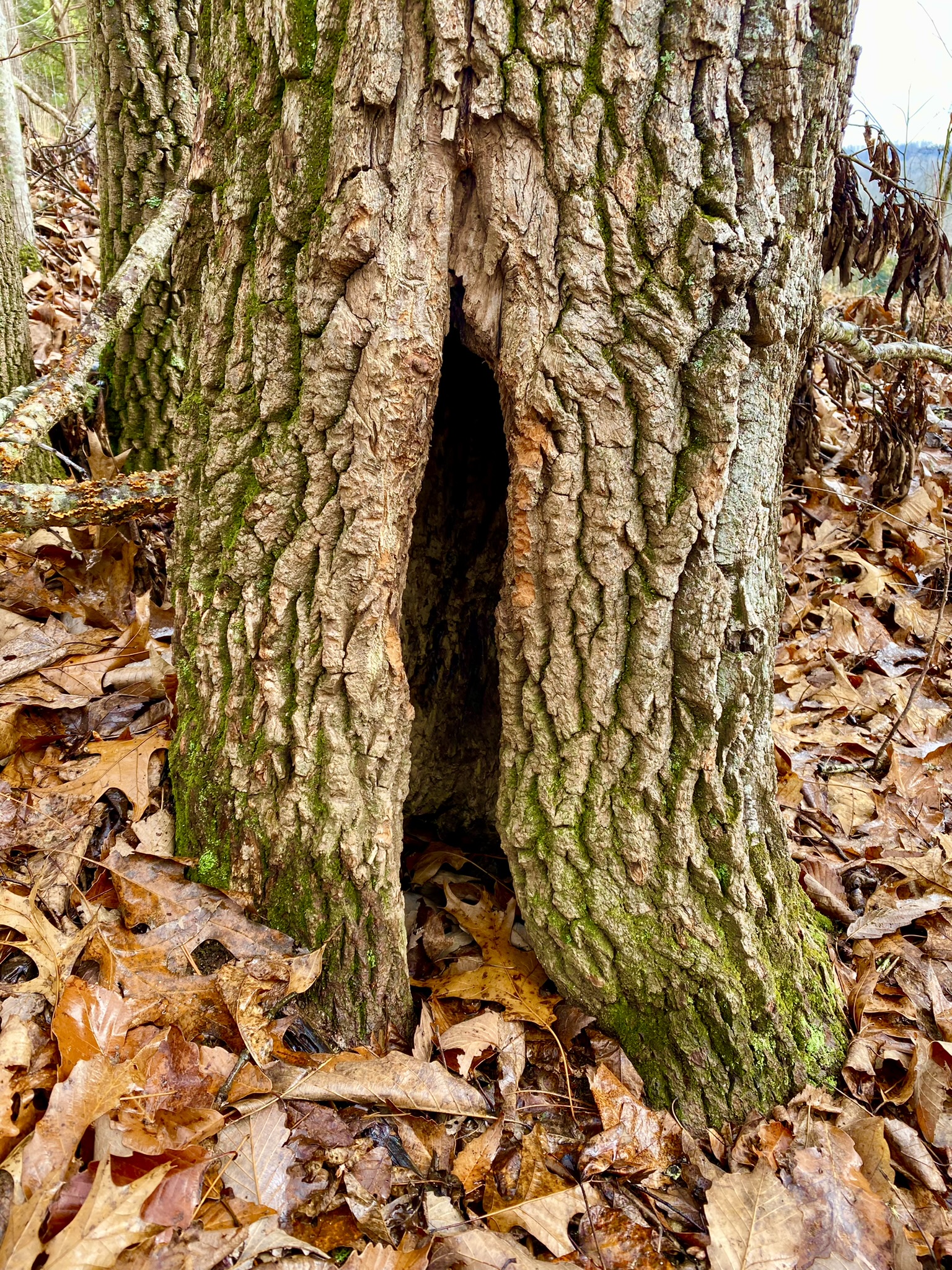
Hollowed out trees are common to see on hikes in the woods.
I’m sure you’ve been out hiking and noticed a live tree all hollowed out with a U-shaped hole at the base. This is a disease called heartrot and is pretty common in forest and yard trees. It is caused by a decay fungus that feeds on the wood in the center of the tree that is usually dark in color, called heartwood. That nice chocolate brown of black walnut furniture comes from the heartwood of that tree. The disease gets into the tree through a wound of some sort, and slowly over the years decays the heartwood out until it is hollow.
A wound caused by wildfire is the most common way heartrot gets started in a forest tree. Wounds from a fire normally occur on the uphill side of the tree where leaves tend to pile up against the base. This extra fuel makes the fire burn hotter right against the tree, causing a wound sufficient for fungal entry. Thin-barked trees like beech and red maple are especially susceptible to fire wounding and fungal attack.
Another common wound source is timber harvesting. Felling trees and skidding logs are very physical activities and trees can be wounded in a number of ways: broken limbs, skinned bark, road construction, etc.
Other activities that can cause wounds are firewood cutting, trail construction and tree graffiti. The bottom line is that whatever you do in the woods, do it carefully. Remember what your Mom told you, those scratches and cuts can get infected.
For yard trees, the main way heartrot enters trees is from wounds caused by lawn mowers and weed trimmers. I’ve seen more trees damaged by lawn equipment than I care to remember, and the problem seems to be time. Homeowners and commercial lawn care people get in too big a hurry and ding up trees.
If the trees aren’t killed by girdling outright, they get heartrot, which weakens the trunk and creating a hazardous tree that could come down during a storm and harm homes and humans.
So slow down, people! Don’t let the equipment touch the bark! Use mulch or herbicides near the tree trunk to control grass and weeds and keep the machines away.
Hollow trees do have some usefulness as den trees for several wildlife species, including squirrels, owls, woodpeckers, bears and raccoons.

- Log in to post comments