Hiking Shoes: Choose Your Friends Well
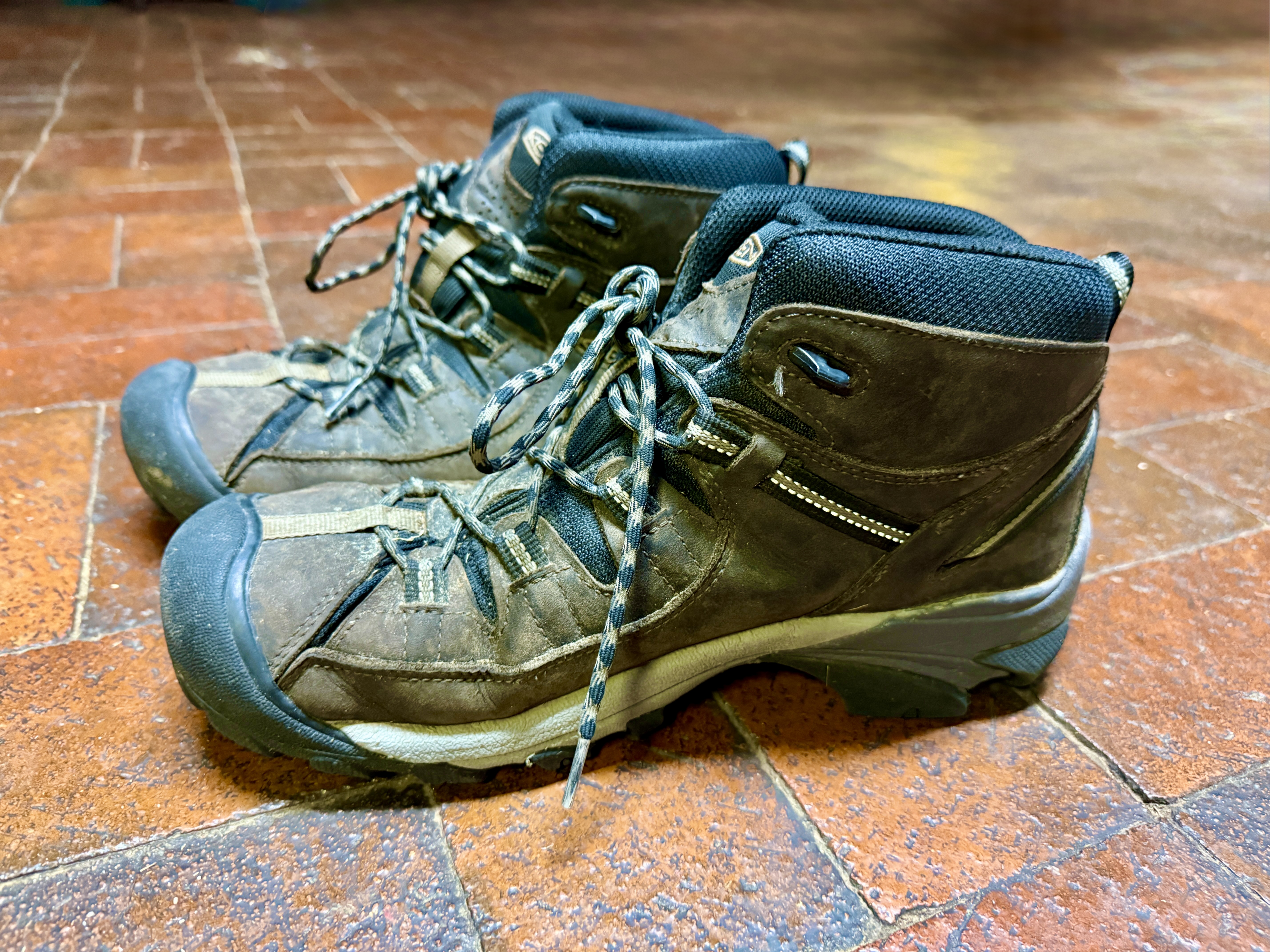
You can get very attached to a good pair of hiking boots, which like a friend support you in your ventures.
By Steve Roark
Volunteer Cumberland Gap National Park
My fun and my work for decades has involved walking over rough terrain, so finding practical but comfortable shoes or boots has been critical. They’re so important to me that I end up emotionally attached to them and mourn when they finally wear out and I must let them go to shoe heaven. I’m teary eyed right now just thinking about it, so today’s article is advice on choosing footwear that will be your close friend.
The first thing to decide is what type of footwear to buy, and the number of styles and brands to pick from is daunting. It really comes down to selecting shoes based on what type of hiking you will mostly do. Here’s a rundown of footwear categories and their suitability: Hiking Sandals: yep, they actually make sandals for short hikes on well-maintained/ smooth trails. Their advantage is they’re light and good for water crossings (in warm weather of course). It would be best to get a sandal that has some sort of toe guard on the front for protection from the occasional rock or root. Hiking Shoes: These are a compromise between regular shoes and boots. They are sturdier than running shoes, with thicker soles and leather reinforced fabric uppers, and yet are lighter and more comfortable than hiking boots. They are okay for day hikes on well-maintained trails, and for trail running, which has become popular. They do make a shoe specifically for trail running, but they are also specifically expensive. Mid-Weight Hiking Boots: this is probably what most people think of when it comes to off-pavement footwear. They provide extra ankle support, are stiffer for better foot support, and normally made of a leather/synthetic fabric blend. They are heavier than shoes, but it is not that noticeable. These are suitable for moderately rough/steep day hikes. For rougher trails it would pay to buy boots with tops that go above the ankle. Heavy Boots: these are for really hard trails with rough, rocky, and steep conditions, and for walking where there is no trail. They will have high tops for good ankle support and protection, made of rugged all leather uppers, and the tread will be extra aggressive for good traction.
Here are a few more considerations when shopping for hiking footwear: arch support is important and should match your foot comfortably. For inclement weather, a waterproof outer layer with a breathable inner membrane such is a good. The stitching should look strong and tight. Soles should be thick, feel firm (not spongy), and have decent lugs for good traction. Better quality boots have stitched-on soles rather than just glued, but they will be pricey. Braided nylon laces are more durable than flat cloth ones.
The most common injuries to feet when hiking are turned ankles, stubbed toes, and blisters. All can be minimized by taking the time to find a good pair of shoes/boots that will be practical and comfortable for the activity you are doing. When it comes to hiking, feet deserve a high priority, because they will get you into the backcountry, and more importantly back out. So, keep them happy with good footwear.

- Log in to post comments