The High Energy Eastern Chipmunk
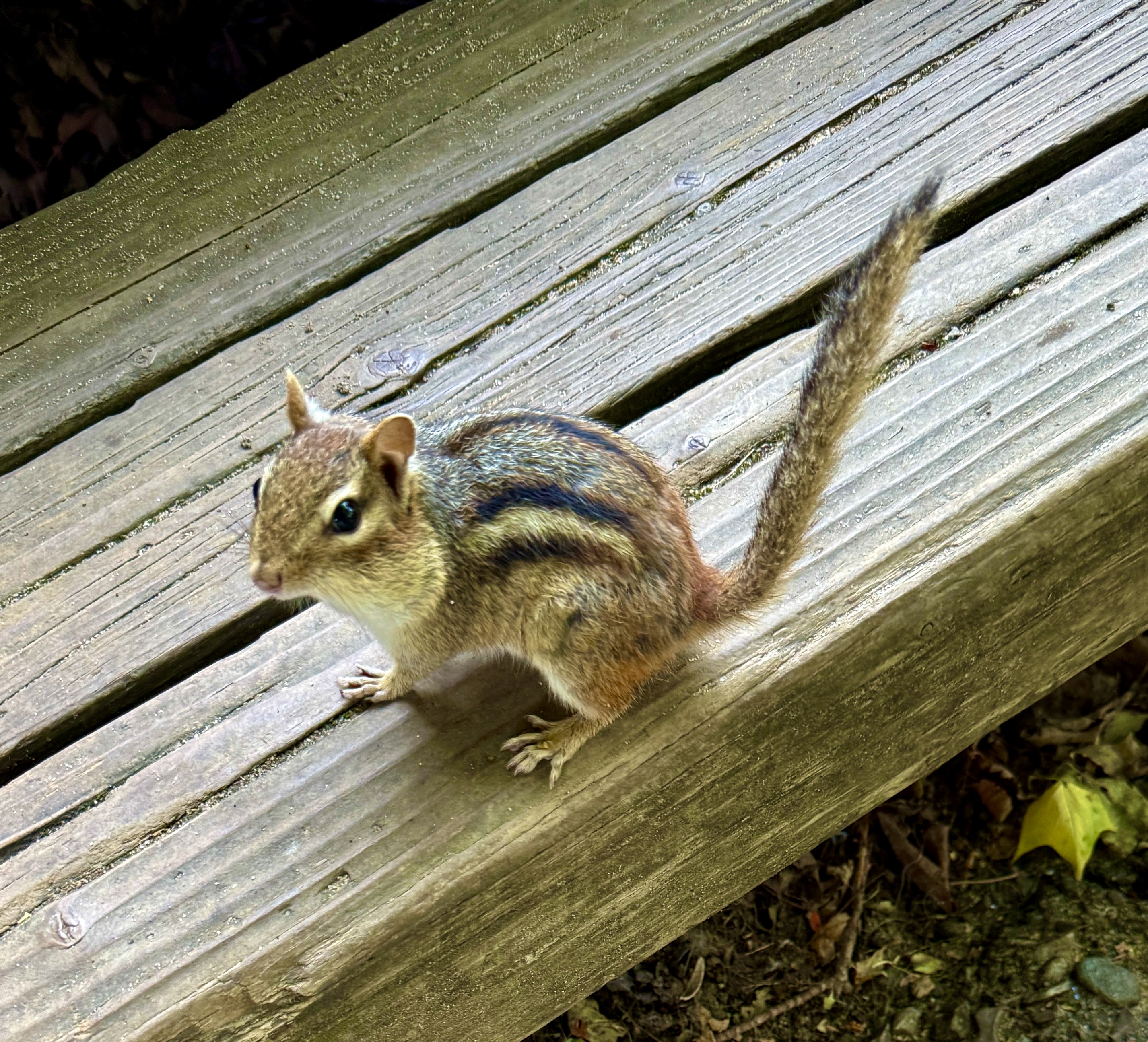
Referred to locally as ground squirrels, the eastern chipmunk is a ground dweller that tends to go at a dead run.
By Steve Roark
Volunteer Cumberland Gap National Historical Park
The eastern chipmunk (Tamias striatus) is a member of the squirrel family and very common in our area and locally called ground squirrels. They are the little reddish-brown squirrels you see scurrying about in the woods. The average chipmunk is only 5-6 inches long with a narrow bushy tail. When they run, note that their tail is held straight up.
Autumn is the easiest time to see chipmunks because they are very busy gathering food for winter. They can be found by listening for them. They give a high pitched "chip”, a lower pitched “chuck”, and a loud chatter when they are startled or having a confrontation with a neighbor.
The chipmunk lifestyle is very busy and mostly centered on gathering food and maintaining a home, which is a burrow. These can be simple structures with one chamber and entrance tunnel, or they can be elaborate mansions with chambers for sleeping, food storage, and a nursery. The entrance is a round hole designed to blend into the surroundings and remain unseen by predators.
Chipmunks are active during the day (science guys call this diurnal) and sleep at night. The day is mostly spent foraging for food, improving the burrow, and resting off and on. Their home range varies from 1/4 to 3 acres, and within this range is a zone around the burrow that is heavily defended from other chipmunks.
Chipmunks eat a variety of foods, mainly seeds, nuts, and fruits. They also eat mushrooms, beetles, slugs, and worms. They have been known to take an occasional bird egg and are capable of climbing trees. They don’t actively hunt eggs, but if they run across one in a nest of ground nesting birds they will imbibe. A study has shown that ground nesters like veeries and ovenbirds will listen for chipmunk calls to determine their more populated areas and will nest in quieter parts of the forest to prevent egg predation.
As mentioned, Autumn is a very active time of stockpiling food for the winter. Chipmunks have large cheek pouches that allow them to carry a good-sized load to their burrow. This stockpile of food is referred to as a “cache”, and is consumed between times of winter hibernation, which in our area is done only intermittently. When they do hibernate (referred to as torpor) their heart rate slows to around four beats per minute, and their body temperature will match that of their burrow.
As for family life, chipmunks can have two breeding seasons per year, one in early spring and another in early summer. Courtship for the male involves chasing off other males and playfully chasing the female. After mating the male is in turn chased off, and after 31 days the female bears 4-5 young that are hairless and blind. The babes are weaned at 4 weeks, begin to venture outside the burrow at 6 weeks, and denied entrance to the burrow by the mother at 8 weeks. The young chipmunks must then seek lives of their own and have an average life span of 2 to 3 years.

- Log in to post comments