The Hickories
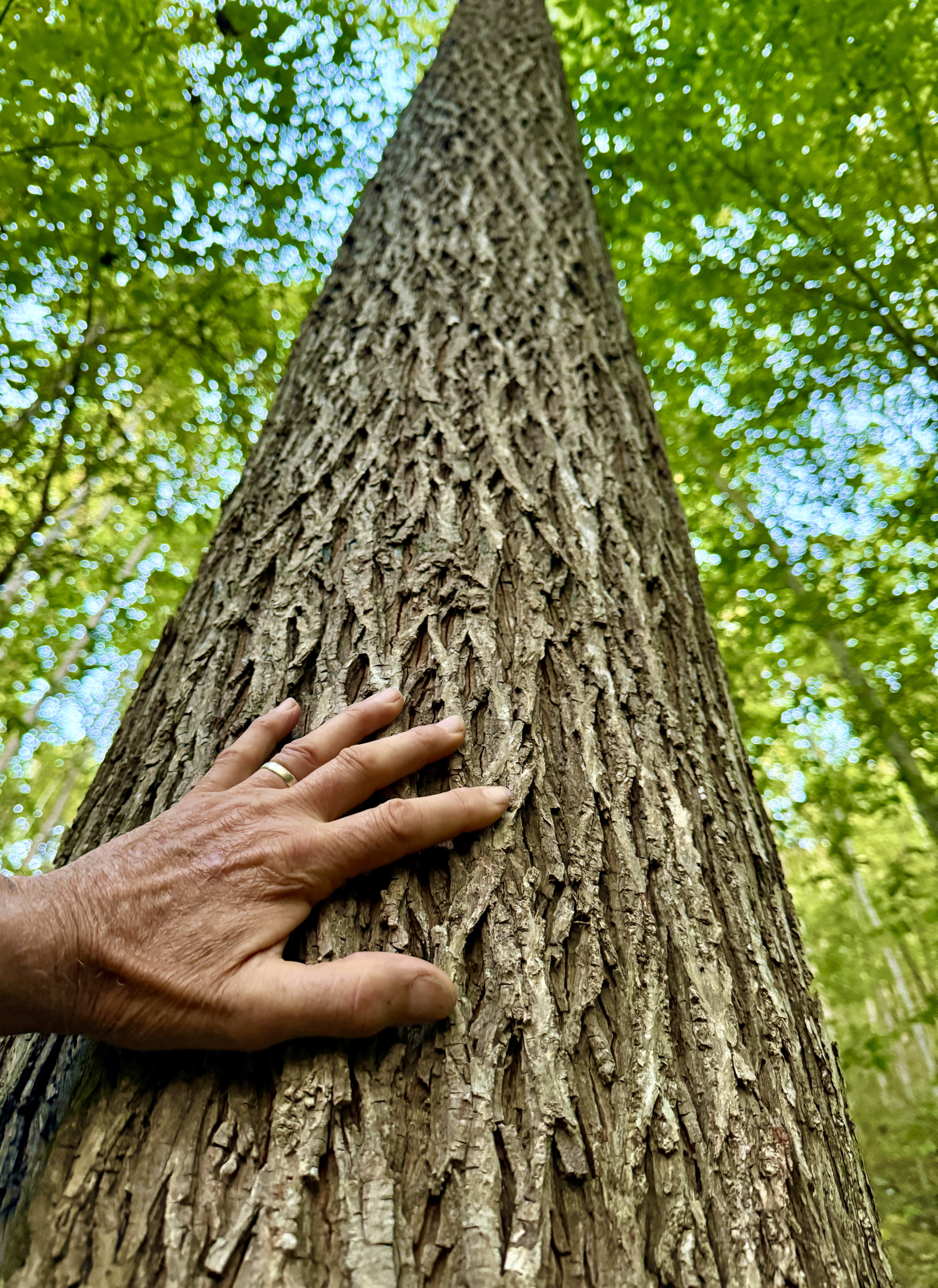
Hickory is a very common tree that can be identified by the bark having a diamond pattern.
By Steve Roark
Volunteer Cumberland Gap National Historical Park
Hickory trees are so common in our area that most of our woodlands are classified as the "Oak-Hickory" forest type. They provide humans and wildlife with important food and fiber.
There are several hickory species growing in our area, the three most common ones being Shagbark, Mockernut, and Pignut. All have compound leaves that have 5 to 9 “leaflets”. The leaves and nut husks have a strong spicy odor. The bark can be identified by its diamond shape pattern and hardness. The easiest hickory to identify in the woods is Shagbark, which has bark that hangs down in long shaggy plates that bend away from the trunk. In earlier times the non-shaggy species were called “tight bark” hickories. They will grow almost anywhere but are more often found on dry slopes and ridges.
The nut of a hickory is easy to identify, being a roundish beige colored nut encased in a green husk that splits into 4 sections. They are an important winter food source for squirrel, turkey, and bear. They are high in fat and calories, and black bear will gorge on hickory nuts to fatten up for hibernation, eating them shell and all.
The Shagbark hickory produces a large enough nut that it’s sought out for human consumption. The nut has an interesting flavor, but I've always found it tough to crack without pulverizing the nutmeat. A more popular nut produced by another member of the hickory family is the Pecan, which is native to west and south of our area.
The wood of hickory is heavy, hard, and very strong. It is used for tool handles and for making charcoal. In the past it was used to make wagon wheels, furniture, barrel hoops, and Model T wheel spokes. The inner bark is strong and leather-like, and was (and still is) popular for caning chair bottoms
Wood smoke from green hickory wood gives grilled meat a nice flavor. Probably the most common use for hickory in our area is for firewood. A cord of seasoned hickory wood has about the same BTU content as a ton of coal.
Symbolically, Hickory denotes strength and patience. President Andrew Jackson was nicknamed “Old Hickory” for his toughness on the battlefield. Hickories are slow growing and it may be decades before begin producing nuts. And once you have them, patience is required when you try to coax a nutmeat out of a hard hickory shell.

- Log in to post comments