Hazard Trees
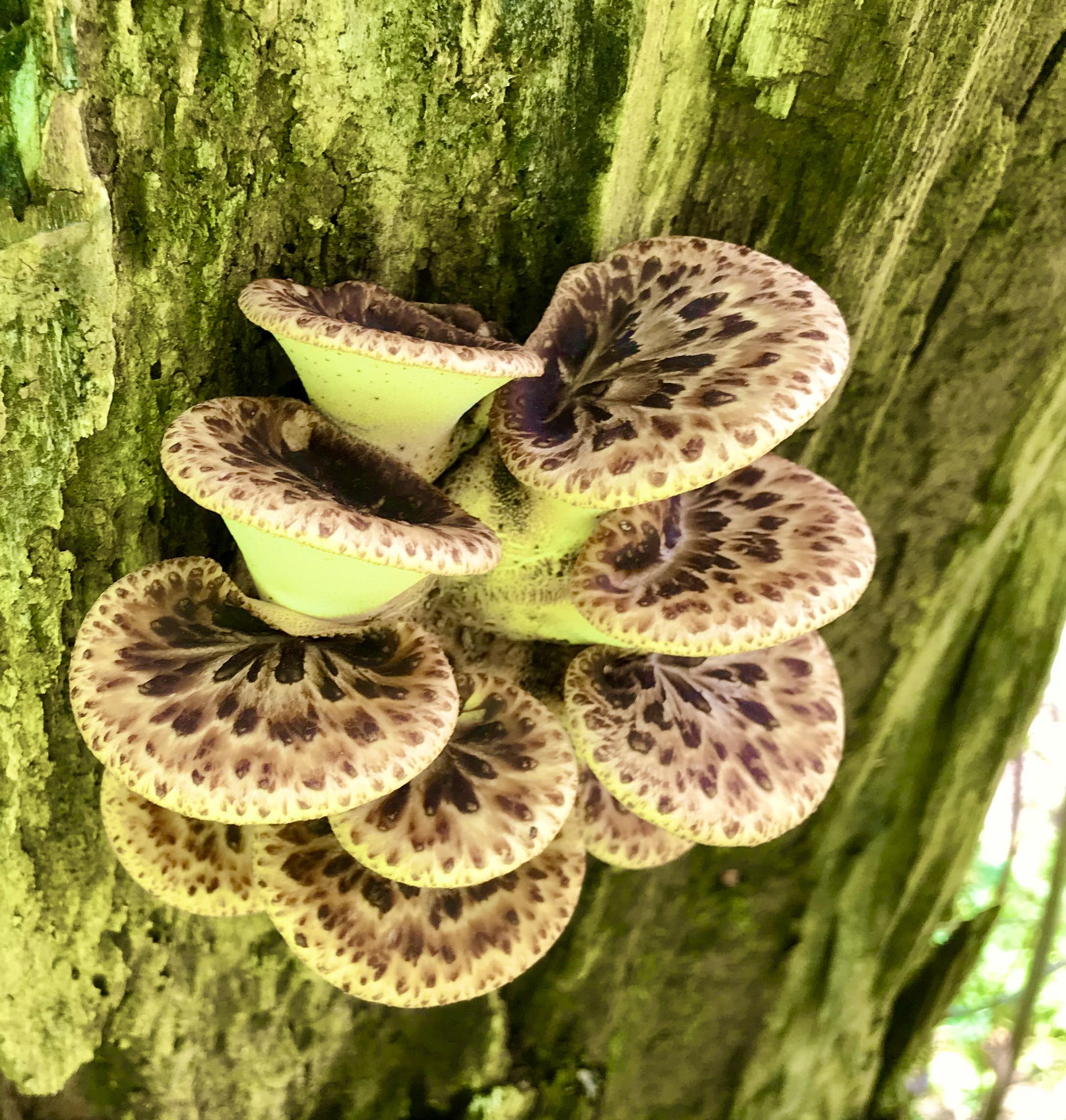
Mushrooms growing on the side of a yard tree indicates wood decay which could pose a hazard of the tree falling down.
Steve Roark
Volunteer Cumberland Gap National Historical Park
Large trees are a great asset in a home landscape, providing shade, beauty, and added property value. Properly maintained trees are normally healthy and will provide these benefits for decades, perhaps a century. But trees with health issues can be dangerous. These are classified as Hazard Trees and pose the threat of dropping large limbs or falling down on people or property. Poor tree health can be caused by landowner neglect, insect or disease attacks, old age, or windstorms.
Homeowners should inspect their trees periodically to monitor their condition and see if any are hazardous and should either have surgery or be taken down. The following are things to look for when doing an inspection.
• Large dead branches in the canopy
• Detached limbs hanging in the tree canopy
• Cavities or rotten wood in the trunk or major branches.
• Mushrooms growing on or at the base of the tree
• Cracks or splits in the trunk or where branches are attached
• Large branches fallen from the tree.
• The trunk has a strong lean, especially towards buildings or driveways.
• Major branches arise from one point on the trunk (narrow crotches between limbs are weak).
• Roots been broken, injured, or damaged by soil disturbance, installing pavement, repairing sidewalks, or digging trenches
• The site around the tree has been changed by a construction project involving fill dirt.
• The leaves prematurely develop an unusual color or size.
If you have concerns about a tree, you should seek expert help to determine what should be done, such as a certified arborist.

- Log in to post comments