The Engine that Changed America: The Story of Ford’s Flathead V8
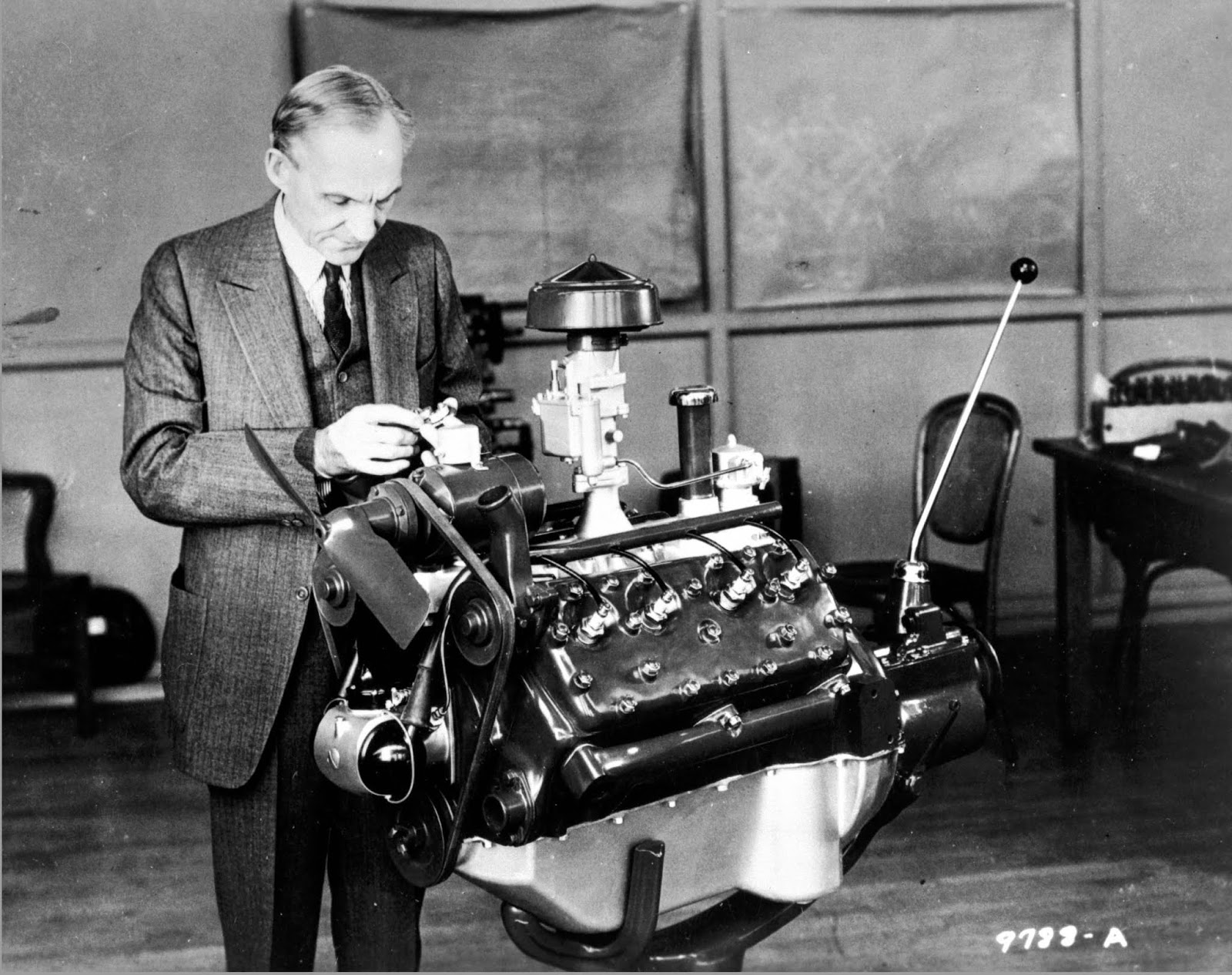
Henry Ford inspects one of the first production Ford Flathead V8 engines in 1932. This revolutionary powerplant brought affordable V8 performance to the American public and forever changed automotive history. (Image from Library of Congress)
Few engines in automotive history have earned the legendary status of Ford’s flathead V8. Introduced in 1932, the flathead forever changed the automotive world by making V8 power affordable for everyday Americans. Before its debut, eight-cylinder engines were reserved for luxury cars and high-end brands, placing them out of reach for most working families.
Henry Ford believed that powerful engines should be accessible to everyone, and his engineering team developed a revolutionary casting process that allowed an entire V8 block to be cast as a single piece. This innovation dramatically reduced production costs and made mass production possible. When Ford unveiled the new V8 in March of 1932, the automotive industry was stunned. For only a small increase in price over a four-cylinder Model B, buyers could now own a smooth, powerful V8-powered automobile.
The engine earned its famous nickname from its flat cylinder heads. Unlike modern overhead-valve engines, the flathead used a side-valve, or L-head, design where the valves were located beside the cylinders rather than above them. This allowed for a compact and simple engine layout that was easy to service and maintain. While the design limited airflow compared to later engines, it proved to be rugged, reliable and capable of impressive performance for its era.
Ford continued refining the flathead throughout its production run. Early versions displaced 221 cubic inches and produced 65-85 horsepower. By the late 1940s, displacement increased to 239 cubic inches, and power climbed to around 100 horsepower. The final American versions, produced from 1949 to 1953, reached up to 110 horsepower and were used in both Ford and Mercury cars and trucks. Over its more than 20-year production run, the flathead became one of the most widely used engines in the world.
No engine played a bigger role in the birth of American hot rodding than the flathead V8. After World War II, returning servicemen began modifying surplus Fords and military vehicles in search of speed. The flathead was plentiful, affordable and easy to modify. Speed equipment manufacturers quickly emerged, producing aluminum cylinder heads, multi-carburetor intake manifolds, hotter camshafts, headers and ignition upgrades. Companies such as Edelbrock, Offenhauser, Iskenderian and Navarro built entire businesses around flathead performance parts. Dry lakes racing in California and early drag strips across the country echoed with the unmistakable sound of flathead-powered machines.
The flathead also proved itself in competition. Early stock car racing in the late 1940s was dominated by flathead-powered Fords. On the Bonneville Salt Flats, streamliners chased speed records using modified flatheads. Circle track racers across America relied on its durability, and many of the earliest drag cars were powered by flathead engines. Its reliability under extreme conditions made it a favorite among racers who needed engines that could survive long, grueling events.
Beyond racing, the flathead V8 served with distinction during World War II. It powered thousands of military vehicles, including trucks, staff cars, half-tracks, industrial equipment and early Jeeps. Its rugged simplicity made it ideal for harsh battlefield conditions, and its reliability helped support Allied logistics across multiple theaters of war.
More than just an engine, the flathead V8 became a symbol of American ingenuity, freedom and speed. It represents an era when backyard mechanics built race cars in their garages, when speed shops were born and when American performance culture truly took shape. Even today, flathead-powered hot rods draw crowds at car shows across the country, and the distinctive sound of a flathead running through lake pipes remains instantly recognizable.
By the mid-1950s, overhead-valve engines such as Ford’s Y-block and later the small-block Chevrolet surpassed the flathead in efficiency and horsepower, bringing an end to its production in the United States in 1953. However, by that time, the flathead had already secured its place in history. More than sixteen million flathead V8 engines were produced between 1932 and 1953, helping to motorize America and ignite the performance movement.
The Ford flathead V8 was not just an engine; it was a revolution. Its durability, speed and launch dominated early racing, powered a generation of working Americans and became the heartbeat of classic car culture. Nearly a century later, its legacy still rumbles on.
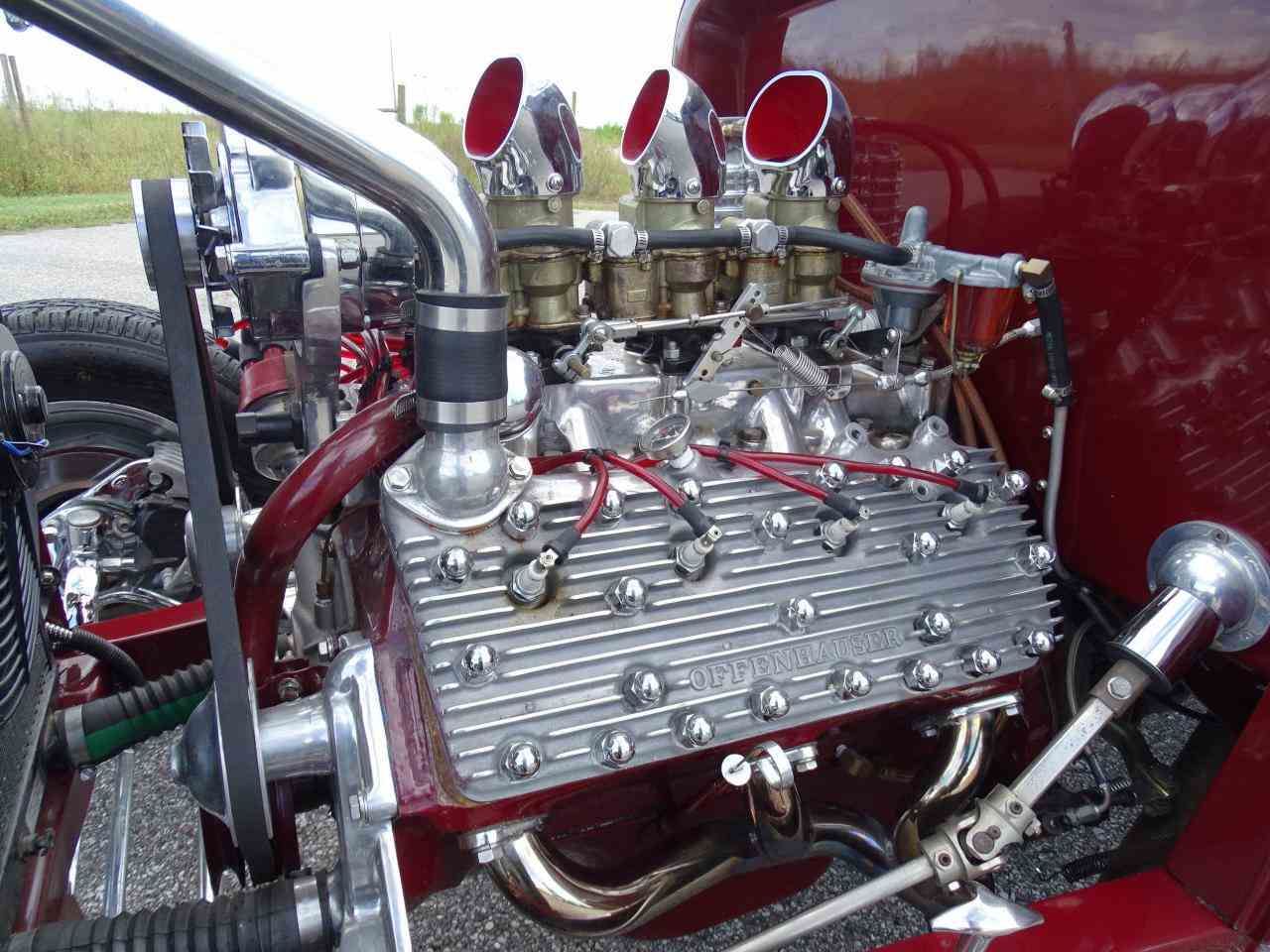
A beautifully Hot-Rodded Ford Flathead V8 Engine dressed with Offenhauser heads and triple carburetors. A classic hot rod powerplant that showcases the timeless style and performance heritage of America’s first affordable V8.

- Log in to post comments