Eating a Miracle
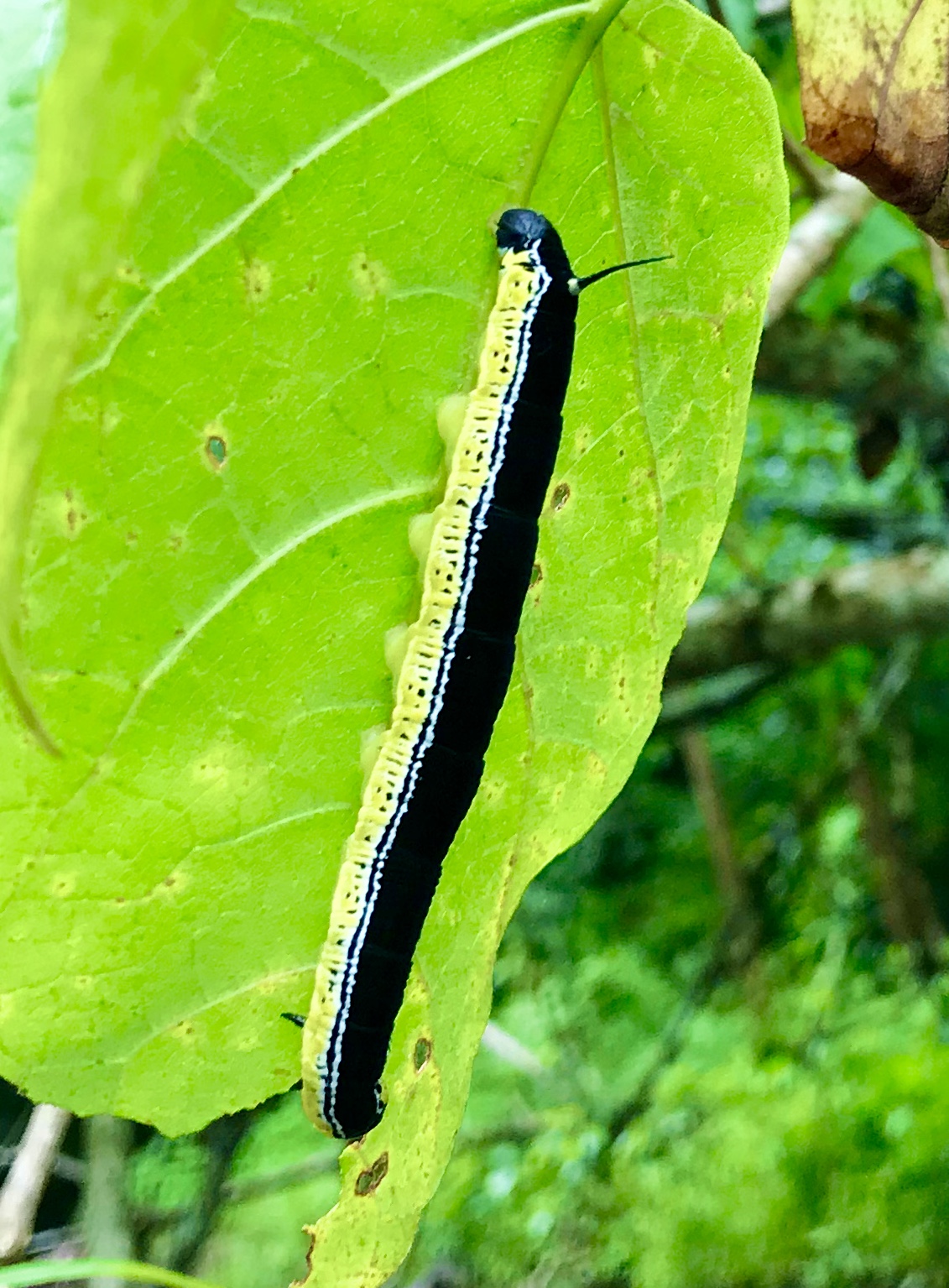
This caterpillar is obtaining food energy from eating a plant that in turn got that energy through the miracle of photosynthesis.
By Steve Roark
Volunteer Interpreter, Cumberland Gap National Historical Park
As an amateur naturalist I have a curiosity to know how things work. In college I once saw the chemical reactions involved in photosynthesis laid out on a large poster. This all-important method plants use to make food for themselves (and ultimately us) was incredibly complex and took up half the wall. It is so complex that it’s tempting to simply say that plants bring in carbon dioxide and water, add sun energy, then a miracle happens and out comes oxygen and food. This is true, but let me attempt to elaborate on the miracle part.
Photosynthesis occurs in green structures found in leaves called chloroplasts. As mentioned, the ingredients for making food include water brought by the plant roots, carbon dioxide that enters the leaf through pores called stomata and sun energy.
The recipe is as follows: take six carbon dioxide molecules, combine with six water molecules in the chloroplast-mixing bowl. Use sun energy to blend well and recombine the carbon, oxygen and hydrogen atoms into a glucose sugar that has six carbon, 12 hydrogen, and six oxygen atoms. Six oxygen molecules will float to the top of the bowl and can be poured off into the atmosphere for later breathing. The plant may store the glucose molecule for later use as food energy, or link them into long chains to form carbohydrates such as starches and cellulose (wood) for use as construction material for building stems, flowers, etc.
So that’s food production, so let’s now look at food consumption. Green plants must have energy to function just like us animal kingdom folk, and so there is a way to get energy from the glucose sugar plants made. This energy is chemically stored in the bonds that hold the molecule together. Sun energy was used to create the bonds, and when the molecule bonds are broken, energy is released.
The recipe for making energy from glucose sugar is as follows: You need a mixing bowl called a mitochondrion (mi-toe-con-dree-ah), which is in every plant and animal cell. Its job is to pull molecules apart. Place one molecule of glucose and six oxygen molecules in the bowl and stir until the glucose breaks down to six carbon dioxide and six water molecules, which releases energy for use by the plant as needed. The water and carbon dioxide are poured out into the atmosphere where it is available to be taken up by the plant to turn it back into food, which is a very neat and important cycling event. It’s why our planet is alive.
The same glucose breakdown to obtain energy is done in animals as well, but we must go through the added step of eating something that has stored food. Bread from wheat is food stored as a form of starch made from carbohydrates, which are long chains of glucose. The steak that we eat for energy is animal muscle made of proteins, which are made from glucose molecules derived from the green grass the cow ate. Next time you eat a big porterhouse, ponder the miracle of what you are eating.

- Log in to post comments