Persimmon Hunting
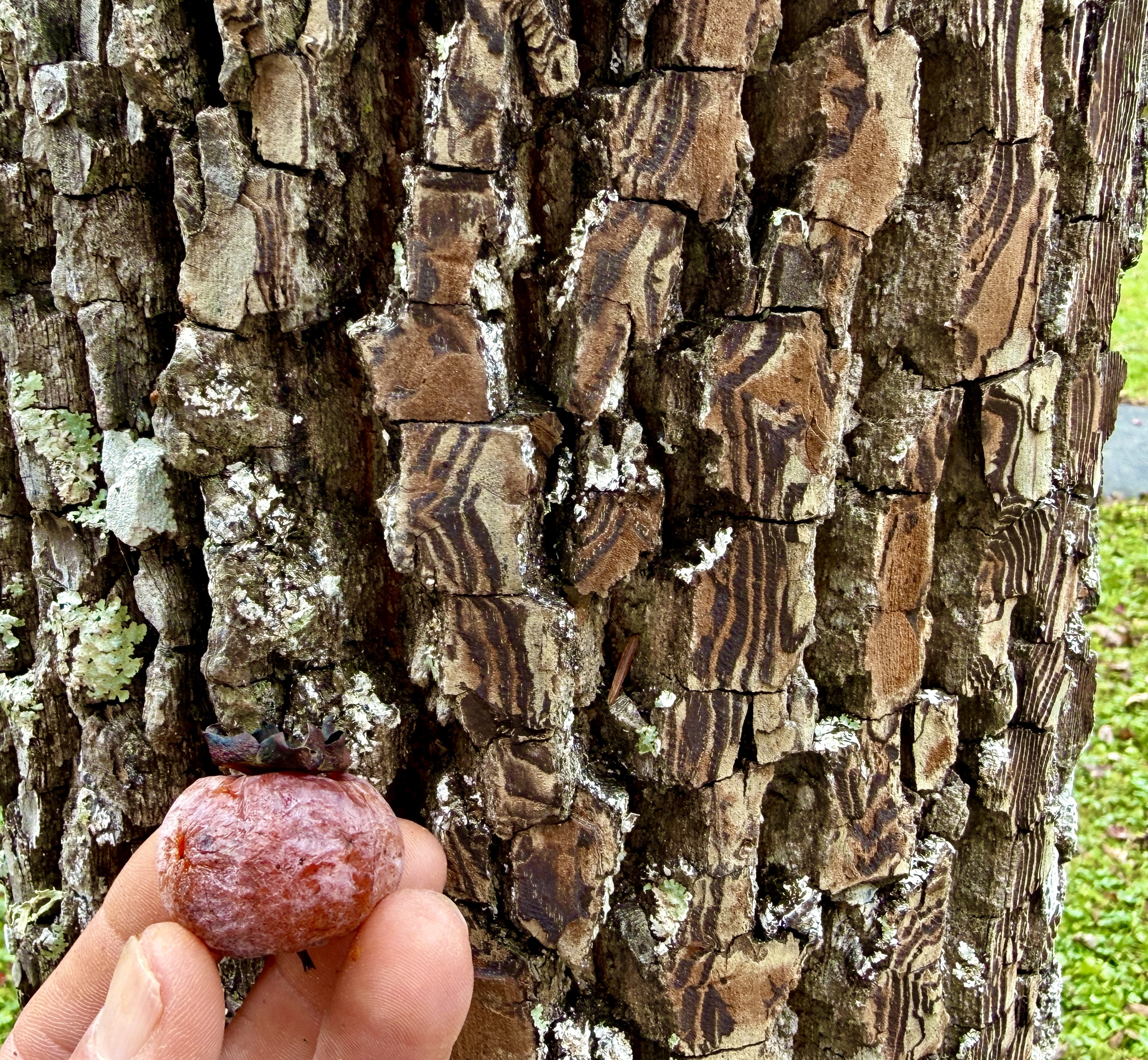
Persimmons are easy to identify by their bright orange fruit and blocky black bark with streaks in the inner bark that in earlier times were called possum tracks. They are popular to eat by wildlife and humans alike.
By Steve Roark
Volunteer Cumberland Gap National Historical Park.
Persimmons are a popular food source for many wildlife species such as fox, opossum, deer, raccoon, and a number of birds. Humans also find them quite tasty if gathered at the right time. If you want to try some, be sure and take along the kids when foraging, as a closer walk with nature is always a good thing.
Persimmon trees are very common in our area and can be found along country roads, fencerows, and abandoned farmland that’s overgrown and brushy. Remember to get permission from the landowner before hunting anything, animals or plants. You can identify the tree by looking for the 1-2 diameter yellow/orange fruit hanging in the branches or on the ground beneath. It will have a woody 4-lobed woody calyx where it was attached to the tree. The bark of the tree is black and has a blocky pattern. If you scratch off some of the outer bark you will see bands of black and brown. Old timers call these possum tracks I guess because opossums really like the fruit.
Persimmons start to ripen around the end of September, and many of the fruits will stay on the tree until mid-winter. To be edible, a persimmon must be "mushy" ripe with a jam-like consistency. You will know when you've bitten into an unripe one because it is astringent and makes your tongue feel weird. The astringent is located in the peel. Dead ripe persimmons are very orange in color, wrinkled, and soft. Ripe ones will fall from the tree at the slightest touch. The fruit is often out of reach so give the tree a good shake and many will come down. If you’ve never eaten persimmons, only eat a small amount at first in case of food allergies.
Persimmons are best eaten on the spot while you enjoy being outside. If you want to keep some for later use, you can run the fruit through a strainer to remove the peel and seed (each fruit has 2-6 large seed). The resulting pulp should be frozen or dried promptly, as it has a short shelf life. To dry the pulp, use a dehydrator or spread it out on a cookie sheet and oven dry it on low heat until the pulp is leather-like. Cut it into chunks and store in a glass jar. Dried persimmon can be eaten like candy and is great mixed into hot or cold cereals, or fruit breads.
You’ll end up with a bunch of persimmon seeds, so if you want to go nostalgic you can check out an old mountain tradition that the seeds can be used to predict the severity of the winter. Cut open a seed along its flat side and look at the embryo in the center. If you see a spoon shape that means you’ll be digging a lot of snow. A knife shape indicates a cold winter where the wind will cut right through you. A fork shape means a relatively mild winter with a split between warm spells and cold spells. I’m told you can squeeze the seeds open with pliers to get at the center. You’re supposed to check several seeds to get a good read on what’s to come.
Persimmons were heavily used by Native Americans, who would plant them close to village and garden areas.

- Log in to post comments